
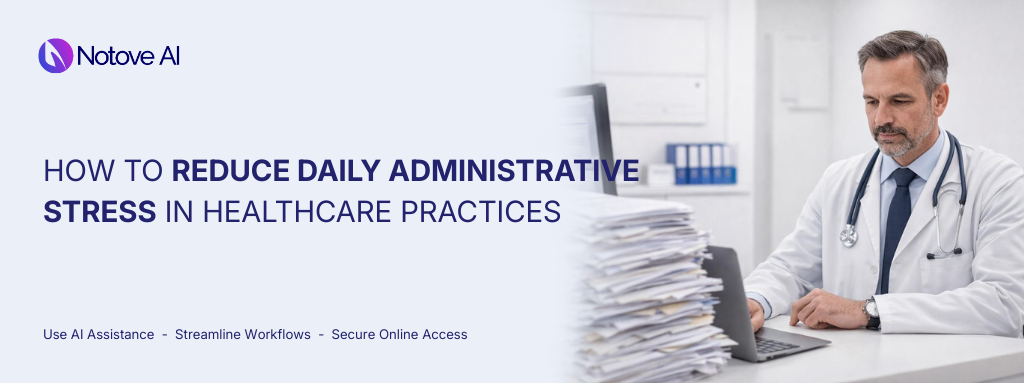
How to Reduce Daily Administrative Stress in Healthcare Practices
Administrative overload has become one of the biggest hidden threats to modern healthcare practices. While technology, regulations, and documentation requirements were designed to improve care, many clinicians now find themselves spending more time on paperwork than with patients.
From prior authorizations and compliance checks to EHR updates and patient communications, the daily administrative burden contributes directly to burnout, reduced job satisfaction, and even patient safety risks.
The good news? Administrative stress is not inevitable. With the right workflows, technology, and mindset, healthcare practices can reclaim hours each week—without sacrificing compliance or care quality.
This guide explores practical, proven strategies to reduce daily administrative stress in healthcare practices and shows how smart automation can help clinicians focus on what matters most: patient care.
Why Administrative Stress Is So High in Healthcare
Healthcare administration is uniquely complex. Unlike other industries, providers must juggle:
- Strict regulatory requirements (HIPAA, HITECH, payer rules)
- Time-sensitive documentation
- Interoperability issues between systems
- Staffing shortages
- Increasing patient expectations
Physicians now spend nearly two hours on administrative work for every hour of patient care, according to multiple industry studies. Over time, this imbalance leads to fatigue, inefficiency, and errors.
Common Administrative Pain Points
- Prior authorizations
- Insurance verification
- Clinical documentation
- Referral coordination
- Compliance audits
- Scheduling and follow-ups
Reducing stress starts with understanding where time is being lost—and why.
The Hidden Cost of Administrative Overload
Administrative stress doesn’t just affect clinicians—it impacts the entire healthcare ecosystem.
For Physicians
- Burnout and emotional exhaustion
- Less time for patient interaction
- Increased documentation errors
For Practices
- Lower productivity
- Staff turnover
- Delayed reimbursements
- Compliance risks
For Patients
- Longer wait times
- Slower referrals
- Reduced care satisfaction
Reducing administrative stress isn’t a “nice-to-have”—it’s a business, safety, and quality imperative.
Step 1: Identify Tasks That Don’t Require Clinical Judgment
One of the biggest mistakes practices make is treating all work as equally important for physicians to handle.
In reality, many daily tasks do not require clinical expertise.
Examples of Low-Value Admin Tasks
- Prior authorization form population
- Insurance eligibility checks
- Data entry into EHRs
- Referral follow-ups
- Compliance documentation
- Patient reminders and status updates
By clearly separating clinical decision-making from administrative execution, practices can dramatically reduce cognitive load.
Step 2: Standardize and Simplify Workflows
Chaos creates stress. Consistency reduces it.
Standardized workflows help teams:
- Move faster
- Make fewer mistakes
- Reduce decision fatigue
- Train new staff more easily
Practical Workflow Improvements
- Use standardized templates for documentation
- Create checklists for recurring tasks
- Centralize admin requests in one system
- Eliminate duplicate data entry
Even small changes—like unified intake forms or standardized referral steps—can save hours weekly.
Step 3: Automate Repetitive Administrative Work
Automation is no longer optional in healthcare—it’s essential.
Modern AI-powered administrative tools can handle repetitive, rules-based tasks faster and more accurately than humans, while maintaining compliance.
Tasks Ideal for Automation
- Prior authorization preparation
- Eligibility verification
- Document routing
- Audit trail creation
- Compliance checks
- Data extraction from clinical notes
Automation doesn’t replace clinicians—it protects their time.
Step 4: Use AI That Understands Healthcare Context
Not all automation tools are created equal.
Generic software often fails in healthcare because it doesn’t understand:
- Medical terminology
- Clinical workflows
- Regulatory requirements
- Specialty-specific nuances
Healthcare-trained AI systems—like Notove AI—are designed specifically for clinical environments, learning from real workflows rather than forcing teams to adapt to rigid software.
What Healthcare-Specific AI Does Better
- Interprets clinical context accurately
- Maintains audit-ready documentation
- Aligns with HIPAA and HITECH requirements
- Integrates into existing systems
The result: less rework, fewer errors, and lower stress.
Step 5: Improve Prior Authorization Management
Prior authorizations are one of the largest contributors to daily administrative stress.
Delays, rejections, and back-and-forth communication drain time and energy.
How to Reduce Prior Auth Stress
- Pre-validate requirements automatically
- Use AI to populate forms accurately
- Track status in real time
- Maintain clean documentation trails
AI-driven admin assistants can significantly reduce authorization turnaround times—freeing clinicians from constant follow-ups.
Step 6: Strengthen Compliance Without Extra Work
Compliance is non-negotiable—but it doesn’t have to be manual.

How to Reduce Daily Administrative Stress in Healthcare Practices
Administrative overload has become one of the biggest hidden threats to modern healthcare practices. While technology, regulations, and documentation requirements were designed to improve care, many clinicians now find themselves spending more time on paperwork than with patients.
From prior authorizations and compliance checks to EHR updates and patient communications, the daily administrative burden contributes directly to burnout, reduced job satisfaction, and even patient safety risks.
The good news? Administrative stress is not inevitable. With the right workflows, technology, and mindset, healthcare practices can reclaim hours each week—without sacrificing compliance or care quality.
This guide explores practical, proven strategies to reduce daily administrative stress in healthcare practices and shows how smart automation can help clinicians focus on what matters most: patient care.
Why Administrative Stress Is So High in Healthcare
Healthcare administration is uniquely complex. Unlike other industries, providers must juggle:
- Strict regulatory requirements (HIPAA, HITECH, payer rules)
- Time-sensitive documentation
- Interoperability issues between systems
- Staffing shortages
- Increasing patient expectations.
Physicians now spend nearly two hours on administrative work for every hour of patient care, according to multiple industry studies. Over time, this imbalance leads to fatigue, inefficiency, and errors.
Common Administrative Pain Points
- Prior authorizations
- Insurance verification
- Clinical documentation
- Referral coordination
- Compliance audits
- Scheduling and follow-ups
Reducing stress starts with understanding where time is being lost—and why.
The Hidden Cost of Administrative Overload
Administrative stress doesn’t just affect clinicians—it impacts the entire healthcare ecosystem.
For Physicians
- Burnout and emotional exhaustion
- Less time for patient interaction
- Increased documentation errors
For Practices
- Lower productivity
- Staff turnover
- Delayed reimbursements
- Compliance risks
For Patients
- Longer wait times
- Slower referrals
- Reduced care satisfaction
Reducing administrative stress isn’t a “nice-to-have”—it’s a business, safety, and quality imperative.
Step 1: Identify Tasks That Don’t Require Clinical Judgment
One of the biggest mistakes practices make is treating all work as equally important for physicians to handle.
In reality, many daily tasks do not require clinical expertise.
Examples of Low-Value Admin Tasks
- Prior authorization form population
- Insurance eligibility checks
- Data entry into EHRs
- Referral follow-ups
- Compliance documentation
- Patient reminders and status updates
By clearly separating clinical decision-making from administrative execution, practices can dramatically reduce cognitive load.
Step 2: Standardize and Simplify Workflows
Chaos creates stress. Consistency reduces it.
Standardized workflows help teams:
- Move faster
- Make fewer mistakes
- Reduce decision fatigue
- Train new staff more easily
Practical Workflow Improvements
- Use standardized templates for documentation
- Create checklists for recurring tasks
- Centralize admin requests in one system
- Eliminate duplicate data entry
Even small changes—like unified intake forms or standardized referral steps—can save hours weekly.
Step 3: Automate Repetitive Administrative Work
Automation is no longer optional in healthcare—it’s essential.
Modern AI-powered administrative tools can handle repetitive, rules-based tasks faster and more accurately than humans, while maintaining compliance.
Tasks Ideal for Automation
- Prior authorization preparation
- Eligibility verification
- Document routing
- Audit trail creation
- Compliance checks
- Data extraction from clinical notes
Automation doesn’t replace clinicians—it protects their time.
Step 4: Use AI That Understands Healthcare Context
Not all automation tools are created equal.
Generic software often fails in healthcare because it doesn’t understand:
- Medical terminology
- Clinical workflows
- Regulatory requirements
- Specialty-specific nuances
Healthcare-trained AI systems—like Notove AI—are designed specifically for clinical environments, learning from real workflows rather than forcing teams to adapt to rigid software.
What Healthcare-Specific AI Does Better
- Interprets clinical context accurately
- Maintains audit-ready documentation
- Aligns with HIPAA and HITECH requirements
- Integrates into existing systems
The result: less rework, fewer errors, and lower stress.
Step 5: Improve Prior Authorization Management
Prior authorizations are one of the largest contributors to daily administrative stress.
Delays, rejections, and back-and-forth communication drain time and energy.
How to Reduce Prior Auth Stress
- Pre-validate requirements automatically
- Use AI to populate forms accurately
- Track status in real time
- Maintain clean documentation trails
AI-driven admin assistants can significantly reduce authorization turnaround times—freeing clinicians from constant follow-ups.
Step 6: Strengthen Compliance Without Extra Work
Compliance is non-negotiable—but it doesn’t have to be manual.
Smart technology can help healthcare practices stay compliant by design.
Key Compliance Areas
- HIPAA (privacy, access controls)
- HITECH Act (EHR security, breach protocols)
- Audit readiness
- Documentation accuracy
How AI Helps
- Automated access logs
- Encrypted data handling
- Continuous compliance checks
- Real-time alerts
This reduces stress by turning compliance from a burden into a background process.
Step 7: Reduce Cognitive Load for Clinicians
Administrative stress isn’t just about time—it’s about mental energy.
Every form, alert, and interruption increases cognitive load.
Ways to Reduce Cognitive Load
- Minimize context switching
- Centralize admin communications
- Use assistants instead of alerts
- Automate documentation handoffs
When clinicians don’t have to constantly “remember” admin tasks, they perform better clinically.
Step 8: Measure What’s Working
You can’t reduce stress if you don’t measure it.
Track metrics such as:
- Time spent on admin tasks
- Prior auth turnaround times
- Documentation error rates
- Staff satisfaction
- Patient throughput
Even modest improvements compound over time.

How Notove AI Helps Reduce Daily Administrative Stress
Notove AI is built specifically to remove administrative friction from healthcare practices.
What Notove AI Supports
- Prior authorization workflows
- Secure data handling
- Compliance documentation
- Audit trails
- Administrative task automation
All while keeping clinicians in control—and patients at the center.
By offloading repetitive administrative work, Notove AI helps healthcare teams reclaim time, reduce burnout, and deliver better care.
Compliance is non-negotiable—but it doesn’t have to be manual.
Final Thoughts: Less Paperwork, Better Care
Administrative stress doesn’t have to define healthcare.
By standardizing workflows, automating repetitive tasks, and using healthcare-trained AI, practices can transform daily operations—without sacrificing compliance or quality.
Reducing administrative stress isn’t about working harder.
It’s about working smarter.
And when clinicians have more time, focus, and energy, everyone benefits—especially patients.
Ready to reduce daily admin stress?
Explore how Notove AI can help your practice reclaim time and simplify healthcare administration.
Join the waitlist for early access at notove.com
Share Post:
Be First to Try Notove
Join the waitlist and get early access, updates, and exclusive onboarding support.