

Why Physicians Spend 13 Hours a Week on Prior Authorizations and What It's Costing You
Prior authorization has a way of finding you before your day even starts: it’s 7:15 AM, your first patient hasn’t walked through the door yet, and you’re already staring at a backlog of PA requests, payer portal notifications, and voicemails from pharmacy staff. By lunch, you’ve spent 45 minutes justifying a medication your patient has been stable on for two years. By end of day, you’ve done a peer-to-peer call that should have taken 10 minutes but ate into your last appointment slot.
This is not an unusual Tuesday. This is most days for most physicians.
According to the American Medical Association, physicians and their staff spend an average of 13 hours per week managing prior authorization requests. That number sounds manageable until you do the math: that’s over 650 hours per year, per physician, spent on administrative friction rather than patient care. This article breaks down where that time actually goes, what it’s genuinely costing your practice, and how to start clawing it back.
What Prior Authorization Actually Looks Like Day to Day
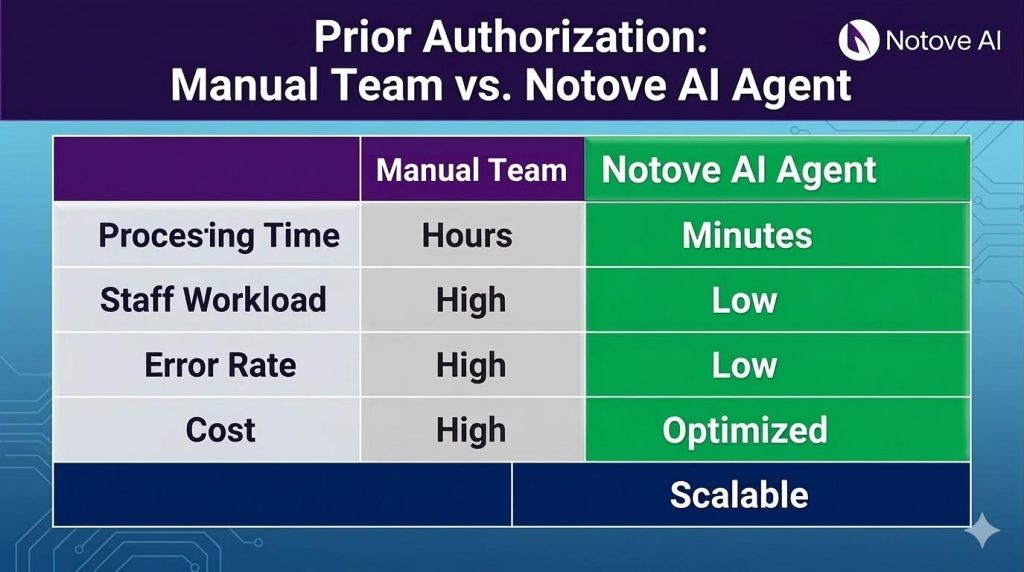
Prior authorization (PA) is the process by which a physician must obtain approval from a patient’s insurer before a medication, procedure, or imaging study is covered. In theory, it’s a utilization management tool. In practice, it’s a multi-step gauntlet.
A typical PA workflow looks like this: a prescription or order is placed, staff checks whether the payer requires approval, a form is submitted with clinical documentation, the insurer reviews it, and then a decision comes back. Except it’s rarely that clean. Payers reject submissions for missing documentation. Portals go down. Fax numbers change. Criteria differ between the pharmacy benefit and the medical benefit for the same drug.
Physicians end up pulled into tasks that feel decidedly non-clinical: rewording justification language to match payer criteria, providing medical necessity explanations for treatments they’ve ordered dozens of times, and jumping on peer-to-peer calls with insurance reviewers who may or may not have the same clinical background.
The friction compounds when you’re managing multiple payers, each with their own portal, their own timelines, and their own moving target of requirements.
Why 13 Hours Is Actually an Undercount
The 13-hour figure captures time spent directly on prior authorization tasks. It doesn’t fully account for what researchers call “attention residue,” the cognitive cost of switching between clinical work and administrative tasks.
A physician stepping out of a patient room to handle an urgent PA request doesn’t just spend 12 minutes on the call. They spend the next several minutes mentally re-entering the clinical context they left. Multiply that across a full clinic day and the real productivity loss is considerably higher than the clock suggests.
PA work also bleeds into evenings and weekends. Documentation reviews, peer-to-peer prep, and appeals don’t always fit neatly between appointments. For many physicians, prior authorization is a direct contributor to burnout, not because of any single task, but because of the accumulated sense that clinical judgment is being second-guessed by systems that don’t know your patients.
The Real Cost Breakdown
The cost of prior authorization to your practice falls into three distinct categories.
Direct labor costs
Include every staff member who touches a PA request: medical assistants pulling records, nurses documenting clinical rationale, front desk staff submitting through portals, and billing staff tracking outcomes. Physician time, priced at a fully loaded hourly rate (salary, benefits, malpractice, overhead), is the most expensive input in that chain. When you calculate the true cost, use fully loaded figures rather than base salary alone.
Opportunity cost
Is where the numbers get uncomfortable. Every hour a physician spends on prior authorization is an hour not spent on a billable patient encounter. One peer-to-peer call can displace a short follow-up visit. Repeated PA interruptions reduce scheduling flexibility, particularly in specialties like oncology, rheumatology, and cardiology where prior authorization volume tends to run high. The formula is straightforward: hours per week multiplied by your practice’s contribution margin per visit gives you a concrete weekly figure.
Downstream costs
Are the hardest to quantify but arguably the most significant. When prior authorization delays run long, patients abandon treatment, develop complications from uncontrolled conditions, or simply go elsewhere. That last outcome, known as patient leakage, is both a revenue and a reputation problem. Online reviews, front desk conflict, and lost referral relationships all trace back to approval delays that felt avoidable.
Where the Process Breaks Down
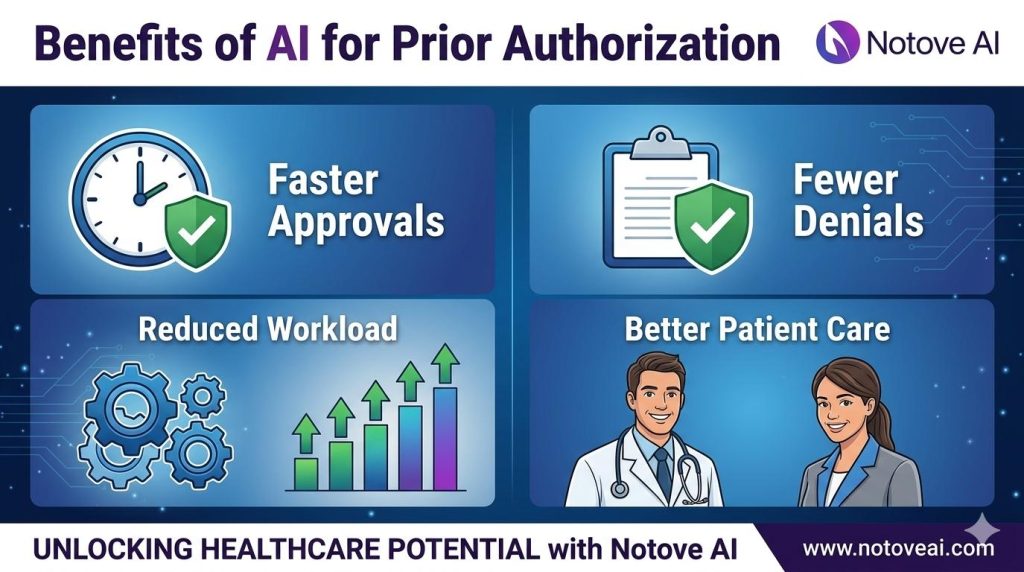
Most PA problems are process problems masquerading as payer problems. Yes, insurers make this harder than it needs to be. But practices that struggle most with prior authorization volume often share common internal weaknesses: no clear ownership, no payer-specific documentation, and no tracking system to identify patterns.
The most common bottlenecks include submitting incomplete documentation on the first pass, coding and diagnosis specificity that doesn’t meet payer criteria, and no internal escalation path when a request stalls. If your practice has a high rework rate (multiple submissions for the same request), frequent last-minute peer-to-peer calls, or approvals that arrive after the clinical window has closed, your PA process is leaking money at multiple points.
Six Practical Ways to Reduce Prior Authorization Time
Standardize your documentation at the point of care: Build visit note templates for your highest-PA services that automatically capture diagnosis specificity, prior therapies tried, contraindications, relevant labs, and guideline references. The goal is to make the information payers need easy to extract without the physician having to reconstruct it later.
Build payer-specific playbooks: For your top five payers, document the required forms, common denial triggers, portal steps, typical turnaround times, and escalation contacts. Maintain and update these quarterly. A new staff member with a good playbook will outperform an experienced one working from memory.
Create a dedicated PA triage lane: Assign ownership: one person or role that is responsible for tracking every open request, escalating stalled ones, and communicating status updates. Set internal service level agreements, same-day submission for urgent cases, 24 to 48 hours for routine, and daily follow-up after a defined waiting period.
Prepare peer-to-peer packets in advance: A one-page clinical summary with the key medical necessity criteria met, supporting evidence, and alternatives considered cuts peer-to-peer call time significantly. Schedule these calls in protected time blocks rather than letting them interrupt clinic flow.
Use electronic prior authorization where your EHR supports it: Real-time benefit checks can surface covered alternatives before a PA is even necessary. EHR order sets that prompt required documentation and auto-attach relevant notes reduce submission errors. Technology helps most when your underlying workflow is already standardized.
Build a decision framework for appeals: Not every denial is worth fighting the same way. Define clear thresholds for when to appeal, when to switch therapy, and when to request an exception based on clinical urgency and patient preference. Keep templated appeal letters with patient-specific inserts and evidence references ready to go.
Conclusion
Prior authorization is not just a paperwork problem. It is a time problem, a revenue problem, and for many patients, a care access problem. The 13 hours per week physicians spend on PA is a symptom of fragmented processes and payer friction, and the real cost includes labor, lost clinical capacity, and downstream harm that rarely shows up in a single line item.
The most useful first step is measurement. Track your practice’s PA time for two weeks, calculate the actual cost using fully loaded hourly rates, and identify the top three bottlenecks. Then standardize one workflow and build one playbook before moving to the next.
If you want a faster path to fixing this, Notove was built specifically to help physician practices cut the administrative weight of prior authorization without adding more staff or complexity. Visit notove.com to see how practices are reducing PA cycle time and getting back to patient care.
Frequently Asked Questions
What is prior authorization and why do insurers require it?
Prior authorization is a requirement from a health insurer that a physician obtain approval before a medication, procedure, or imaging study will be covered. Insurers use it to manage costs, promote guideline-adherent care, and reduce unnecessary utilization. The problem is that the criteria are often outdated, inconsistently applied, and disconnected from the clinical nuance a treating physician brings to the decision.
How can I calculate what prior authorization is actually costing my practice?
Multiply your weekly PA hours by your fully loaded hourly cost (salary plus benefits plus overhead), then add staff hours at their respective rates, then add the contribution margin for any visits or procedures displaced by PA-related time. Running this calculation for four weeks gives you a reliable baseline and a concrete target for improvement.
Which specialties are most affected by prior authorization burden?
Oncology, rheumatology, cardiology, orthopedics, and radiology typically carry the heaviest prior authorization load due to the cost and complexity of the medications and procedures involved. That said, primary care practices with high chronic disease panels also face substantial volume, particularly around specialty referrals and branded medications.
What is a peer-to-peer review and how can I make it less disruptive?
A peer-to-peer review is a call between the ordering physician and an insurance medical reviewer to discuss a denied or pending prior authorization. They are most disruptive when unplanned and under-prepared. Preparing a one-page clinical summary in advance, scheduling calls in protected time blocks, and tracking which payers trigger them most frequently all reduce their impact on clinic flow.
Is technology a reliable solution for reducing prior authorization time?
Electronic prior authorization tools can meaningfully reduce submission errors and speed up routine approvals, but only when your internal workflows are already organized. Digitizing a broken process produces faster broken results. Standardization and role clarity should come first; technology amplifies what is already working.
Share Post:
Be First to Try Notove
Join the waitlist and get early access, updates, and exclusive onboarding support.