

Patient access is the first real test of whether a specialty clinic can turn a referral into a completed visit. Every scheduling call, insurance check, and intake form is part of that test. When any single step slips, patients wait longer, clinics lose revenue, and staff absorb the strain. Specialty practices feel this pressure more than most, because their scheduling rules are rarely simple.
What Is Patient Access in Healthcare?
Patient access covers every administrative step that connects a patient to care. It starts with the first phone call or online booking request a patient makes. Registration comes next, when staff collect basic information and confirm a patient’s identity. Insurance verification follows, checking that a patient’s coverage is active and applies to the visit. Referral coordination tracks whether an outside referral was received and scheduled correctly. Financial clearance closes the loop by confirming what a patient will owe before the appointment happens. All of this happens before a physician ever sees the patient. That is why patient access is often called the front door of healthcare. For specialty clinics, that front door carries extra weight, since one missed step can delay urgent treatment.
Why Patient Access Looks Different in Specialty Clinics
Primary care scheduling is fairly predictable, since most visits follow similar time slots and rules. Specialty care rarely works that way. An oncology follow-up might depend on lab results, a treatment cycle, and a payer’s authorization window. An orthopedic consult might depend on imaging results and detailed notes from a referring physician. Every one of those details has to line up before a patient even gets on the calendar. Patient access teams in specialty clinics juggle this clinical complexity on top of ordinary scheduling work. Many specialty groups also operate inside an Accountable Care Organization, which adds its own referral and reporting rules. That structure can shape how quickly a new patient actually gets seen. Provider shortages make this harder, since federal data shows many regions lack enough specialists to meet demand.
The Warning Signs Patient Access Is Breaking Down
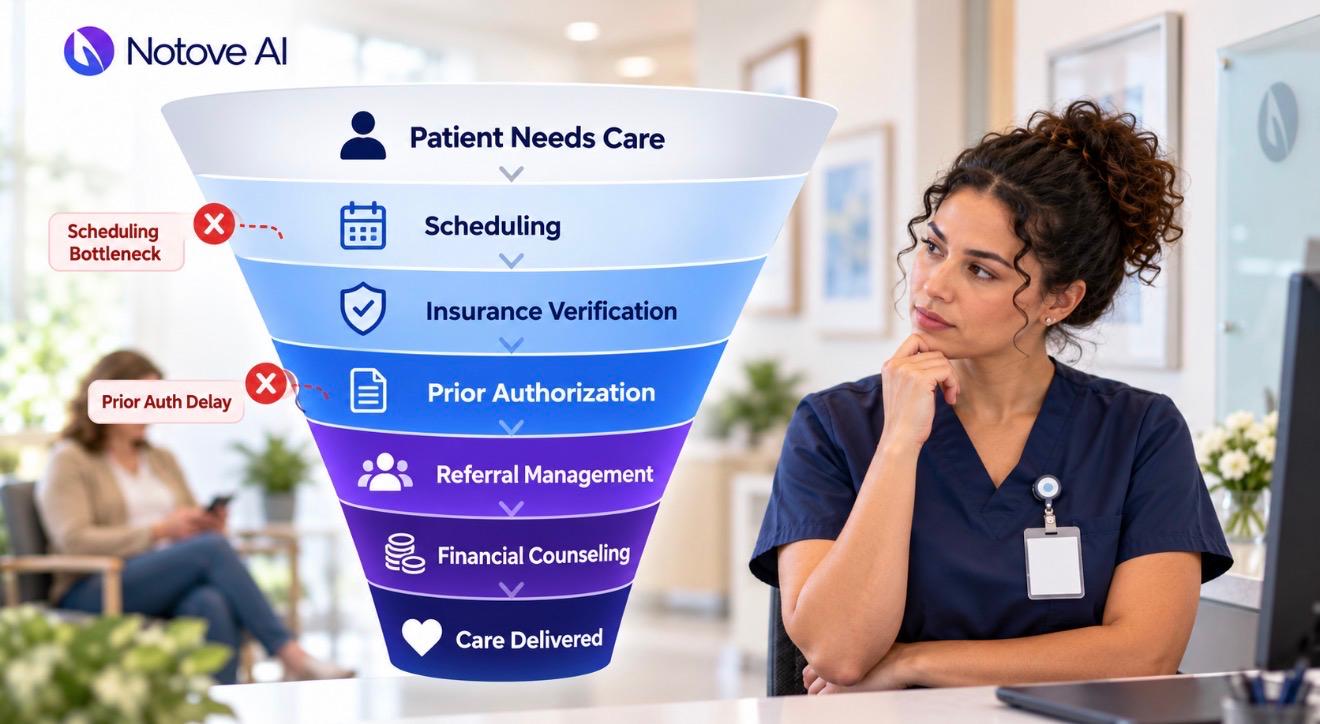
Certain patterns show up again and again once patient access starts to fail. Clinic leaders across the country are reporting the same pressure points heading into 2026. A late 2025 poll of medical group leaders ranked these patient access pressure points by priority.
| Patient Access Pressure Point | Share of Practices Naming It a Top 2026 Priority | Extra Strain on Specialty Clinics |
|---|---|---|
| No-show appointments | 27% | Complex specialty visits are harder to refill on short notice |
| Online scheduling gaps | 24% | Sub-specialty booking rules rarely fit generic scheduling tools |
| Phone access and abandoned calls | 22% | More than half of incoming calls reportedly go to voicemail |
| Long new-patient wait times | 21% | Average new-patient waits now stretch past 30 days in several specialties |
These numbers describe operational strain, not just a minor inconvenience for patients. Each pressure point above also touches billing and revenue in ways many clinics underestimate.
Simple Metrics That Reveal Patient Access Health
A few simple metrics show whether patient access is actually working day to day. Call abandonment rate tracks how many callers hang up before reaching a staff member. Third next available appointment measures how many days out a new patient must wait. No-show rate tracks how many scheduled visits end without the patient arriving. Referral conversion rate tracks how many outside referrals turn into a completed visit. Watching even two or three of these numbers monthly makes patient access problems visible early.
Where the Patient Access Breakdown Actually Starts
Patient access rarely fails at one single point in the process. It usually fails in the gaps between systems that were never designed to talk to each other. Staff often work across a scheduling platform, a payer portal, and an EHR system that holds the clinical record. When information does not move cleanly between those systems, small errors turn into real delays. Insurance verification is a common failure point, especially when coverage details change without notice. Medical billing teams downstream often catch these errors only after a claim is denied. Accurate front-end data also depends on clean medical coding further along in the revenue cycle. Referral leakage is another quiet cause, happening when a specialist never receives a referral that was sent. Staffing shortages make every one of these problems harder to catch in time.
The Real Cost of a Broken Patient Access Process

The financial impact of poor patient access is larger than most clinics realize. Missed appointments alone cost providers close to 150 billion dollars every year nationwide. No-show rates at some practices range from 14 percent to 50 percent of scheduled visits. Every empty slot represents lost revenue that a specialty clinic rarely recovers later. Patient access failures also push patients toward other providers who can see them sooner. That lost volume compounds over time, since a frustrated patient rarely returns quietly. Staff burnout is the less visible cost, as front-desk teams absorb complaints they cannot fix alone. Federal shortage data suggests more than one hundred million people already live in areas with too few primary care providers.
How Specialty Clinics Can Strengthen Patient Access
Fixing patient access does not require replacing every system a clinic already uses. Many clinics start by automating the repetitive parts of scheduling and follow-up. Automated reminders and self-scheduling tools reduce no-shows without adding staff hours. Clear intake checklists also reduce the back-and-forth that slows down registration. Prior authorization sits close to patient access on that same calendar. A stalled authorization can delay a visit just as easily as a scheduling error. That overlap is why some tools focus specifically on the administrative work between an order and an approved visit. AI agents built for specialty clinics like Notove AI handle much of that load automatically. Reducing that workload frees front-desk and clinical staff to focus on patients instead of paperwork.
Patient Access and Prior Authorization Are Closer Than They Look
Patient access and prior authorization often get treated as two separate problems inside a clinic. In practice, they share the same bottleneck, which is administrative capacity. A clinic that struggles with scheduling calls also tends to struggle with authorization follow-up. Both processes depend on accurate documentation pulled from the same clinical systems. Clinics that fix one workflow often see real improvement in the other soon after. That connection is worth remembering when a clinic decides where to invest first.
Protecting Patient Access as Your Clinic Grows
Patient access will keep testing specialty clinics as scheduling complexity grows and staffing stays tight. Clinics that treat it as a strategic priority tend to protect both revenue and patient trust.
Prior authorization is one of the clearest places to start, right next to patient access on the calendar. Reducing the manual work in that single step often creates room to fix scheduling and intake as well.
Notove AI was built to handle exactly that kind of administrative load for specialty clinics. Join the waitlist to see how Notove AI can support your clinic’s patient access and prior authorization workflow.
Frequently Asked Questions
What does patient access mean in a medical practice?
Patient access means the administrative process that connects a patient to care. It covers everything from the first scheduling call through financial clearance before a visit.
What is the difference between patient access and patient experience?
Patient access covers the administrative steps that get someone scheduled and cleared for care. Patient experience covers how that person feels throughout the entire visit.
What causes patient access problems in specialty clinics?
Complex referral rules, tight authorization windows, and ongoing staffing shortages drive most patient access breakdowns in specialty clinics. Generic scheduling tools built for primary care rarely account for that level of clinical complexity.
How does patient access affect revenue cycle management?
Patient access sits at the very start of the revenue cycle, before a single claim is filed. Errors made during scheduling or insurance verification often surface later as denied claims.
Can AI actually improve patient access in a small specialty clinic?
AI tools can genuinely help, especially with repetitive scheduling, reminders, and documentation tasks. They work best when paired with staff who review and approve the final decisions.
What is a patient access representative responsible for?
A patient access representative manages the first points of contact for incoming patients. Their daily work includes registration, insurance checks, and scheduling coordination for new and returning patients.
How can a clinic measure whether its patient access is improving?
Track call abandonment, new patient wait times, and no-show rates every month. A steady drop in all three usually means patient access is improving.