
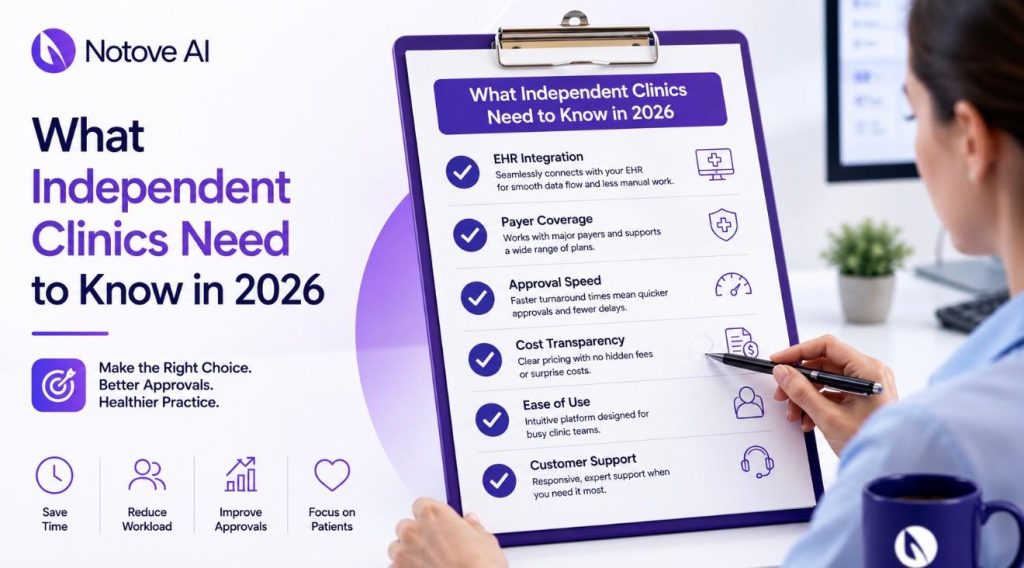
Prior authorization software is no longer optional for independent clinics trying to survive 2026’s payer rules. Volume keeps rising. Complexity keeps rising with it. Payers now ask for more specialty-specific documentation and expect faster turnaround than ever before.
Large hospital systems absorb this with dedicated revenue cycle teams. Independent clinics do not have that luxury. A single missed requirement can delay a scan by weeks. A single denial can mean a write off your practice cannot afford.
This article breaks down the real categories of prior authorization software on the market today. It also gives you a practical framework for choosing the right fit, especially if you run a lean, independent practice.
Why Independent Clinics Still Struggle With Prior Authorization Software in 2026
The problem is not a lack of tools. It is a lack of tools built for how small teams actually work. Payer rules vary by plan, by procedure, and often by region.
Staff already juggle scheduling, billing, and patient calls. Adding hours of documentation chasing on top of that pushes people toward burnout fast. Delayed care, rescheduled procedures, and frustrated patients all trace back to the same root cause.
Most clinics feel this pain long before they ever open a vendor comparison page. That is exactly why choosing the right prior authorization software matters so much right now.
What Prior Authorization Software Actually Means Now
Vendors use the term loosely, so it helps to break the market into three honest categories.
The first category checks eligibility and flags whether a procedure needs authorization at all. The second category focuses on workflow and tracking, meaning tasks, statuses, and follow up reminders. The third category is AI assisted or agentic automation, where the software helps assemble documentation and prepare submissions.
Most independent clinics need a blend of all three. You want detection, document assembly, and tracking, with a human reviewing everything before it goes out. That blend is where modern prior authorization software earns its keep.
The Non-Negotiable Checklist Before You Compare Vendors
Before comparing any prior authorization software, independent clinics should score every option against a short list of requirements.
Speed to value matters first. Ask how long setup and staff training actually take. Workflow fit matters next, since you need to know exactly who touches each request, whether that is a medical assistant, a nurse, or a biller.
Payer specific intelligence is where many tools fall short. The software should understand different forms and rules across payers and procedures. It should also help gather clinical evidence like notes, imaging, and labs into a payer ready packet.
Tracking, integrations, security, and reporting round out the list. Total cost should include the subscription plus any hidden labor costs your staff absorbs manually.
How We Compared These Tools (Use This Process Yourself)
You do not have to trust marketing claims alone. Pick three to five high volume procedures in your clinic, such as MRIs or specialty injections.
Map your current process from order to approval, including every handoff. Define success metrics like turnaround time, denial rate, and staff minutes spent per request. Then run a two week pilot and measure honestly.
Watch for red flags during this process. Some tools only track status without reducing any actual documentation work. Others claim automation but still require heavy manual copy and paste from your staff.
Notove AI: Prior Authorization Software Built for Independent Clinics
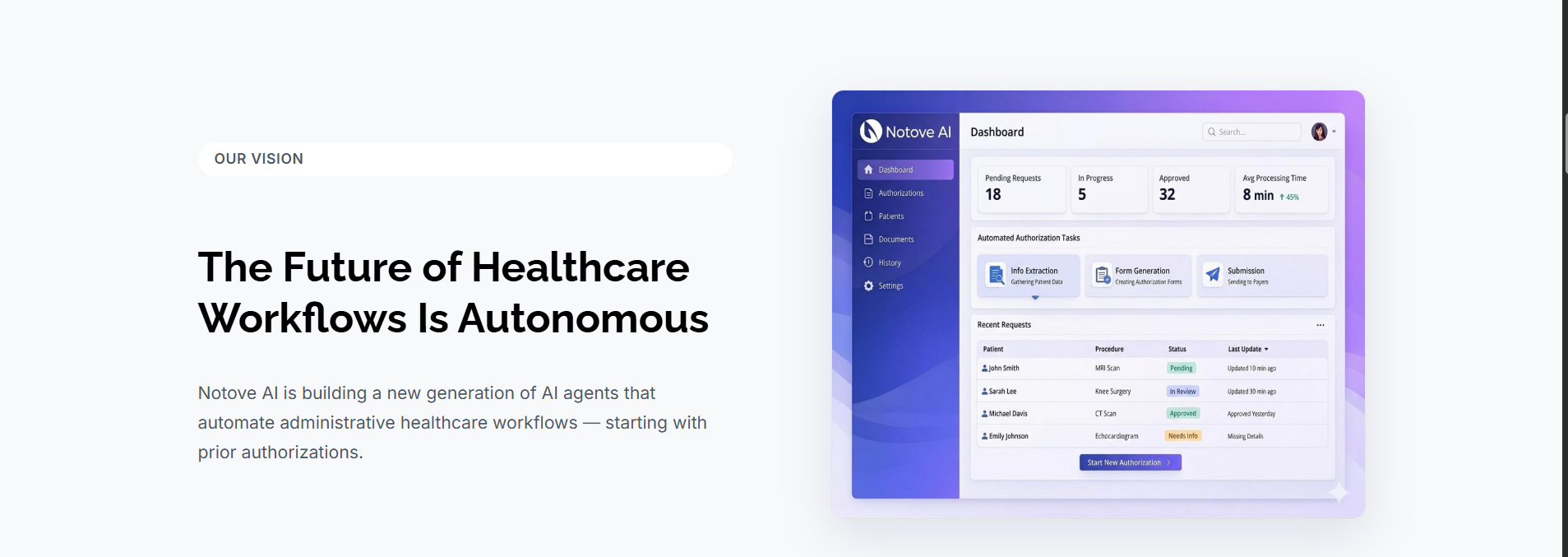
Notove AI is an AI prior authorization agent built specifically for independent and specialty clinics. It automatically gathers documentation, prepares authorization requests, and assists staff with payer submissions.
That workflow can reduce prior authorization workload by up to 80 percent. The platform detects which procedures require authorization, then pulls documentation directly from your EHR. It prepares a payer specific request that staff can review and submit within seconds.
This is different from generic AI tools or basic status trackers. Notove combines payer specific preparation with documentation assembly and guided submission in one place. You can read the full breakdown in this complete guide to AI prior authorization software for small and specialty clinics.
Clinics using this kind of automation report gaining back more than ten hours of patient time each week. Many also report a 60 percent reduction in burnout tied to repetitive paperwork. Notove works alongside any EHR system, with no installation and a five minute setup.
Every request still goes through human review before submission. That human in the loop model keeps your clinic in control while removing the busywork. If you want to see how this fits your specific EHR setup, this article on how EHR integration speeds up the prior authorization process walks through the mechanics in detail.
Traditional Workflow and Tracking Platforms
This category gives clinics centralized work queues, statuses, and reminders. Strengths include better visibility and fewer dropped follow ups across your team.
The common gap is documentation. Staff still spend most of their time collecting evidence and translating it into payer specific submissions manually. These platforms work best for clinics that already have a dedicated prior authorization team in place.
Before choosing one, verify it can attach clinical documents cleanly. Confirm it integrates with your scheduling system and supports multiple locations if you need that.
Clearinghouse and Payer Portal Tools
These tools focus on connectivity rather than documentation. They standardize electronic submissions and reduce login headaches across payer portals.
Coverage varies significantly by payer, and documentation preparation is still largely on your staff. Edge cases often fall back to manual work regardless of the tool. This category fits clinics with a predictable payer mix and simpler documentation needs.
Generic AI Scribes Are Not Prior Authorization Software
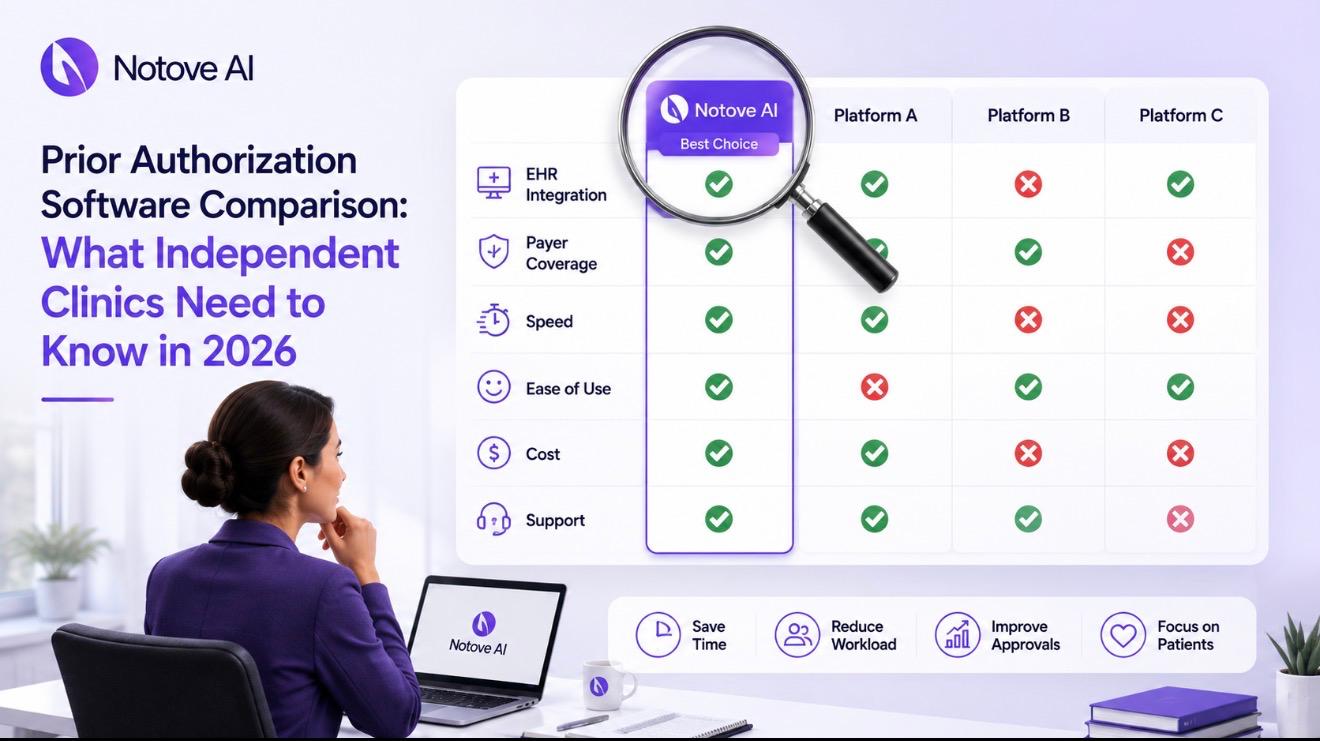
Many clinics try using generic AI tools to draft prior authorization letters. This can help with faster drafting and summarizing chart notes in a pinch.
It does not detect which procedures need authorization in the first place. It also does not reliably assemble the right evidence or track submission status over time. Treat generic AI as a supplement, never as true prior authorization software.
Typical Turnaround Times by Procedure Type
Understanding baseline turnaround expectations helps you judge whether any tool is actually improving your results. Use this as a reference point during your own pilot.
| Procedure Type | Typical Manual Turnaround | Common Denial Trigger |
|---|---|---|
| Advanced Imaging (MRI, CT) | 5 to 10 business days | Missing clinical justification |
| Specialty Injections | 3 to 7 business days | Incomplete prior treatment history |
| Physical Therapy Referrals | 2 to 5 business days | Missing progress notes |
| Oncology Treatment Plans | 7 to 14 business days | Incomplete staging documentation |
| Cardiology Diagnostics | 4 to 8 business days | Missing prior test results |
If your clinic sits above these ranges, documentation gaps are likely the cause, not payer speed.
Which Clinic Type Benefits Most From Which Approach
A radiology clinic with high MRI volume needs fast detection and documentation assembly above everything else. An orthopedic practice with recurring injections and imaging benefits most from automation paired with denial reporting.
A primary care clinic handling referrals and diagnostics needs a lighter, faster setup with minimal disruption. A multi location specialty group might start with a workflow backbone, then add automation later for documentation heavy service lines.
Implementation Without Slowing Your Team Down
Start with one service line and one payer segment in week one. Define exactly who owns the process and who reviews each request before submission.
Keep the process simple with one queue and one daily review cadence. Notove requires no installation and a setup time of about five minutes. Staff still review every request before it goes out the door.
Security and Compliance Requirements for Prior Authorization Software
Any prior authorization software you choose needs a signed business associate agreement and strong encryption. Role based access should limit who can view, edit, or submit protected health information.
Fully autonomous submissions without human sign off are a real risk. Look for explainability, meaning the tool shows exactly what evidence it used and why. Notove maintains HIPAA compliance with enterprise grade encryption and regular security audits.
Pricing and ROI: Is Prior Authorization Software Worth It
Pricing models vary between per user, per transaction, and tiered volume structures. Calculate ROI using staff minutes saved multiplied by hourly cost, plus revenue preserved from fewer denials.
Do not forget the soft ROI either. Reduced burnout and fewer after hours tasks matter for staff retention too. Ask any vendor for pilot based measurement and clear cancellation terms before signing anything.
The Shortlist: What Independent Clinics Should Choose in 2026
If you want the biggest reduction in manual work, choose an AI agent that assembles documentation and prepares payer specific requests. If you mainly need visibility and accountability, a workflow and tracking platform can work, though expect manual documentation to remain.
If your payer mix is narrow, a clearinghouse tool may cover your connectivity needs. For most independent clinics, the practical path is starting with one high volume procedure and measuring real results.
Burnout from administrative paperwork is one of the biggest hidden costs clinics carry today. This piece on ways AI can reduce physician burnout caused by administrative paperwork is worth reading alongside this comparison.
Less paperwork and faster approvals are within reach for independent clinics right now. Notove AI was built specifically to handle prior authorizations end to end for teams like yours. Visit the Notove AI contact page to get early access and start reclaiming hours lost to paperwork every week.
Frequently Asked Questions
What is prior authorization software?
Prior authorization software is a tool that helps clinics determine whether a procedure needs payer approval. It also helps gather documentation, prepare requests, and track submission status over time.
How much time can prior authorization software actually save a clinic?
Well built prior authorization software can reduce administrative workload by up to 80 percent. Many clinics report reclaiming more than ten hours of staff time weekly.
Is AI prior authorization software safe for handling patient data?
Yes, as long as the vendor maintains HIPAA compliance, encryption, and audit logging. Human review before submission is also essential for safety and accuracy.
Does prior authorization software work with any EHR system?
Many modern tools, including Notove, are built to work alongside any EHR system. Full integration details are typically confirmed during onboarding with your specific setup.
What is the biggest mistake clinics make when choosing prior authorization software?
Choosing a tool that only tracks status instead of reducing documentation work. That leaves staff doing the same manual tasks with an extra layer of clicks.
How long does it take to set up prior authorization software?
Setup time varies by vendor, though tools like Notove offer a five minute, web based setup. No installation or IT involvement is required for most independent clinics.