

Top 10 Reasons Prior Authorizations Get Denied — And How to Prevent Each One
Prior Authorizations account for more administrative friction in specialty clinics than almost any other single process. The average request touches multiple staff members, travels through at least one payer portal, and takes days to resolve. When it comes back denied, the damage is real: delayed patient care, frustrated clinical staff, and hours burned on rework that should never have been necessary.
Here is what makes this particularly hard to accept: most denials are preventable. Not all of them, but the majority trace back to process gaps, documentation shortfalls, or avoidable errors that happen before the request even leaves the clinic. This article breaks down the 10 most common denial reasons, with a specific prevention checklist for each one, so your team can stop treating denials as bad luck and start treating them as fixable problems.
Before You Submit: The 60-Second Pre-Check That Prevents Most Denials
Before anything else, run through this short list. Confirm the payer and plan details, because the same insurer often has different authorization rules depending on the patient’s specific plan. Verify that the member is eligible and that coverage is active on the date of service. Check whether a prior authorization is actually required for the requested code. Confirm that the rendering provider, facility, and place of service match what the plan expects. Then pull together the minimum clinical packet: diagnosis, relevant chart notes, prior treatment history, labs or imaging, and a rationale tied to clinical guidelines.
A clean submission is one where the codes are correct, the demographics match, and every document is attached before you hit send. That standard alone eliminates a large share of first-pass denials.
1. Missing or Incomplete Clinical Documentation
This is the most common denial reason across payer types. When a chart note does not demonstrate severity, symptom duration, or what the patient has already tried, the payer does not have enough to approve. Missing imaging reports, absent lab values, and no medication history all fall into this category.
The fix is building a standard PA packet by service line. For specialty medications, that packet should include relevant ICD-10 codes, objective findings, a treatment history with outcomes, any contraindications to alternatives, and the current clinical plan. For imaging, attach the order, the clinical indication, and documentation of conservative therapy if required. Understanding why clinical documentation makes or breaks your insurance approvals is the foundation for getting this right consistently. Use a submission-ready checklist, and require notes to meet that standard before anyone hits send.
2. Medical Necessity Not Clearly Supported
This denial is different from missing documentation. The records exist, but they do not connect the dots. Payers are looking for a specific story: why this service, why now, why alternatives are not appropriate, and what outcome is expected. If the clinical note does not map to payer policy language, the request fails on rationale even when the paperwork volume looks complete.
Prevention means writing a short medical necessity statement for each request that explicitly references the payer’s criteria or relevant national guidelines. Use objective measures: failed therapy dates, pain scores, functional impairment findings, test results. The narrative should make the approval feel like the only logical conclusion.
3. Incorrect or Mismatched Codes
The ICD-10 does not support the CPT. The laterality modifier is missing. The NDC does not match the drug strength requested. These errors are frustrating because they have nothing to do with clinical quality, yet they stop approvals cold.
The table below is a reference for the code issues that come up most frequently in prior auth submissions across different service types:
| Service Type | Common Code Error | Prevention Check |
|---|---|---|
| Specialty injectable | NDC mismatch with approved formulary strength | Confirm NDC against current formulary before submission |
| Bilateral imaging (MRI, X-ray, etc.) | Missing -RT or -LT modifier on CPT code | Add laterality modifier and verify against payer policy |
| Behavioral health services | ICD-10 diagnosis does not support H-code CPT | Map each diagnosis to the payer-approved procedure code list |
| Surgical procedures | Outdated CPT code still active in EHR template | Audit EHR order templates annually for current-year CPT accuracy |
| Specialty drug (infusion or injection) | Wrong J-code for the drug/dose combination | Cross-reference drug name, strength, and J-code every time |
Keep a running list of high-denial code pairs specific to your top payers and flag them automatically before submission. A quick pre-authorization coding review catches most of these before they ever reach the payer.
4. Patient Eligibility, Coverage, or Benefit Limitations
The service is not covered. The patient’s coverage lapsed. The annual benefit maximum was already reached. These denials feel unavoidable, but they often are not. Eligibility can change between the scheduling call and the submission date, which is why verifying on the day you submit matters more than verifying when the appointment was booked.
Check benefit limitations specifically: annual visit caps, formulary tier restrictions, site-of-care requirements for infusions, and step therapy protocols. If the service is not covered, identify covered alternatives before the patient is already in the chair. Document every eligibility verification result in the patient record to reduce repeat lookups and rework.
5. Step Therapy or “Fail First” Requirements Not Met
Payers require documented evidence that a patient tried preferred treatments before the requested option will be covered. Without clear records of what was tried, at what dose, for how long, and why it did not work, the request gets denied regardless of clinical logic.
The solution is a step therapy tracker for common conditions where this comes up routinely: migraine, rheumatoid arthritis, psoriasis, and similar diagnoses. For each prior therapy, document the drug name, dates of use, outcome, and reason for discontinuation. If the patient cannot do step therapy due to an allergy, comorbidity, or drug interaction, submit a formal exception rationale with supporting evidence. Where possible, include pharmacy fill history to confirm the trial actually happened.
6. Wrong Provider, Facility, or Network Status (or Missing Referrals)
An out-of-network rendering provider on an in-network authorization. A mismatch between the ordering physician and the provider who will actually perform the procedure. A missing PCP referral for a patient on an HMO plan. Any of these will kill the authorization before it gets any real review.
Before submission, verify the NPI, tax ID, group affiliation, and network participation for whoever will render the service. Build a standard intake step: who is ordering, and who is performing? They need to match what the plan expects. Referral checks belong in the same intake workflow, not as an afterthought when a denial comes back.
7. Missing Required Tests, Thresholds, or Clinical Criteria
Some services require documented conservative therapy before imaging will be approved. Some biologics require specific lab screenings as a prerequisite. Sleep studies often require a validated score threshold, with both the score and the date it was administered included in the request. If those prerequisites are not documented, the payer has no basis to approve.
Build criteria-based checklists per service category. Before submitting for imaging, confirm conservative treatment documentation is attached. For biologics, attach the lab report. This is where high-volume specialties feel the burden most sharply, and the hidden cost of manual prior authorization in radiology practices puts that into concrete terms. A criteria gate before submission means staff stop chasing preventable denials.
8. Timeliness Issues: Expired Auth, Late Submission, or Missed Deadlines
A retro-authorization the payer will not accept. An approval that expired before the procedure date. A response window that closed because no one followed up. These denials come from process gaps, not clinical ones.
Submit early. Track payer-specific turnaround times and build a follow-up cadence: check in at day two, day five, and day eight depending on each payer’s average SLA. Set calendar alerts for authorization expiration dates, especially for ongoing infusion or therapy schedules. Document every outreach attempt in the patient record in case you need it to support an appeal. Teams still working through manual processes will find that how prior authorization automation cuts approval times addresses this timing problem specifically.
9. Administrative Errors: Missing Signatures, Incomplete Forms, Wrong Attachments
An unsigned order. The wrong version of the payer’s form. The clinical questionnaire that was required but not attached. A document uploaded to the wrong portal field. These are among the easiest denials to prevent and among the most demoralizing to receive.
Standardize your submission channel per payer wherever possible. Create a last-mile admin checklist: confirm the member ID matches, the provider signature is present and dated, all attachments are labeled clearly, and the correct portal or fax destination is being used. Use a consistent file naming convention for uploads, something like PA_PatientName_Payer_ServiceDate, so nothing gets misfiled or overlooked during review.
10. Communication Gaps: Payer Requests More Info, But No One Responds in Time
The payer sent a request for additional records. No one saw it. The peer-to-peer review window closed. The patient was unreachable when their consent was needed. The request was denied for non-response, which means the clinical work was fine, but the follow-through was not.
Assign a single owner to each active authorization, with a clear backup plan for when that person is out. Create a separate tracking status for “pending additional information” and treat it as urgent: respond within 24 to 48 hours. Have a peer-to-peer playbook ready so clinicians know who schedules it, what documentation to bring to the call, and how to record the outcome afterward. Coordinate with patients early on their preferred contact method and set clear expectations on timelines.

How to Use These 10 Reasons as a Repeatable Workflow
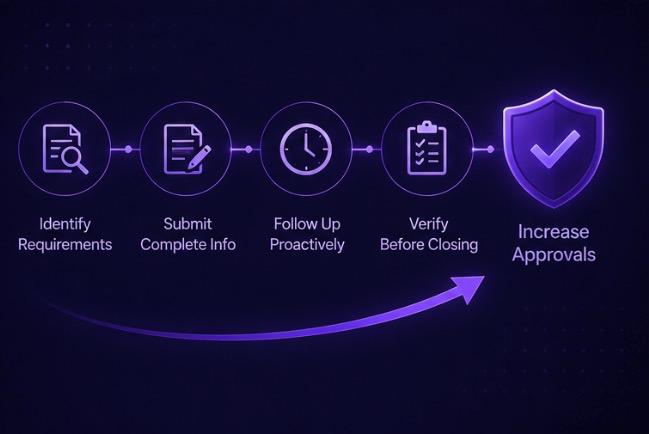
Rather than treating each of these as a standalone fix, turn them into a single end-to-end workflow. Intake leads to eligibility verification, which leads to coding review, which leads to a criteria gate, which leads to packet assembly, submission, active tracking, timely response, and finally scheduling. Each stage needs a clear role owner: front desk or benefits verification staff, the MA or PA coordinator, a coder, and clinician sign-off.
Define what a “clean PA” looks like in your practice and build a return-to-sender loop for anything that does not meet that standard before it goes out. Track three numbers: first-pass approval rate, average time-to-approval, and top denial reasons broken down by payer. Those three metrics will tell you exactly where to focus. Given where things stand today, it also helps to understand the scale of the prior authorization crisis in 2026 to see where your workflow gaps fit into the broader picture across the industry.
Faster Approvals Come From Fewer Guesswork Submissions
Most Prior Authorization denials are not random. They follow patterns, and those patterns are solvable. Pick the two or three denial reasons your team sees most often and implement the matching prevention steps this week. Not the whole list at once. Just the top two or three, done consistently.
When documentation is complete before submission, codes are validated against payer requirements, and follow-up is actually happening on schedule, approval rates improve and care delays go down. That is better for patients and better for every administrative staff member who spends their days navigating this process.
If your practice is ready to reduce the manual workload that builds up around Prior Authorizations, Notove AI was built specifically for this problem. The platform automatically gathers clinical documentation, prepares payer-specific authorization requests, and tracks approvals and follow-ups for specialty clinics and primary care practices. You can explore how it works and request early access at notove.com.
Frequently Asked Questions
What is the most common reason Prior Authorizations get denied?
Missing or incomplete clinical documentation is consistently the leading denial reason across payer types. When chart notes do not demonstrate medical necessity clearly, or when supporting records like lab results and imaging reports are not attached, payers do not have enough evidence to approve the request. Building a service-line-specific documentation checklist is the single highest-impact step most clinics can take.
How long does a prior authorization typically take to process?
It depends on the payer and the type of service. Routine requests often take three to five business days. Specialty drug authorizations and more complex procedures can take two weeks or more. Urgent or expedited requests typically have a 72-hour turnaround requirement under most payer contracts, but timelines vary significantly by insurer and plan type.
Can a denied prior authorization be appealed?
Yes. Most payers have a formal appeal process, and many also offer a peer-to-peer review option where the requesting clinician speaks directly with the payer’s medical director. Appeals are most successful when the original denial reason is addressed directly with additional documentation or a clearer medical necessity argument tied specifically to the payer’s own policy criteria.
What does step therapy mean in a prior authorization context?
Step therapy is a payer requirement that a patient must try one or more preferred or lower-cost treatments before a requested drug or service will be covered. Approval depends on documented proof that the alternatives were tried, and were either ineffective, caused adverse reactions, or are medically contraindicated for that specific patient.
How can a clinic reduce its Prior Authorization denial rate?
The highest-impact changes tend to be building service-line-specific documentation packets, implementing a pre-submission checklist, and assigning clear ownership for tracking and follow-up on every active request. Clinics that track their top denial reasons by payer and address those patterns systematically typically see meaningful improvement in first-pass approval rates within a few weeks, without needing to overhaul their entire workflow at once.
Share Post:
Be First to Try Notove
Join the waitlist and get early access, updates, and exclusive onboarding support.