
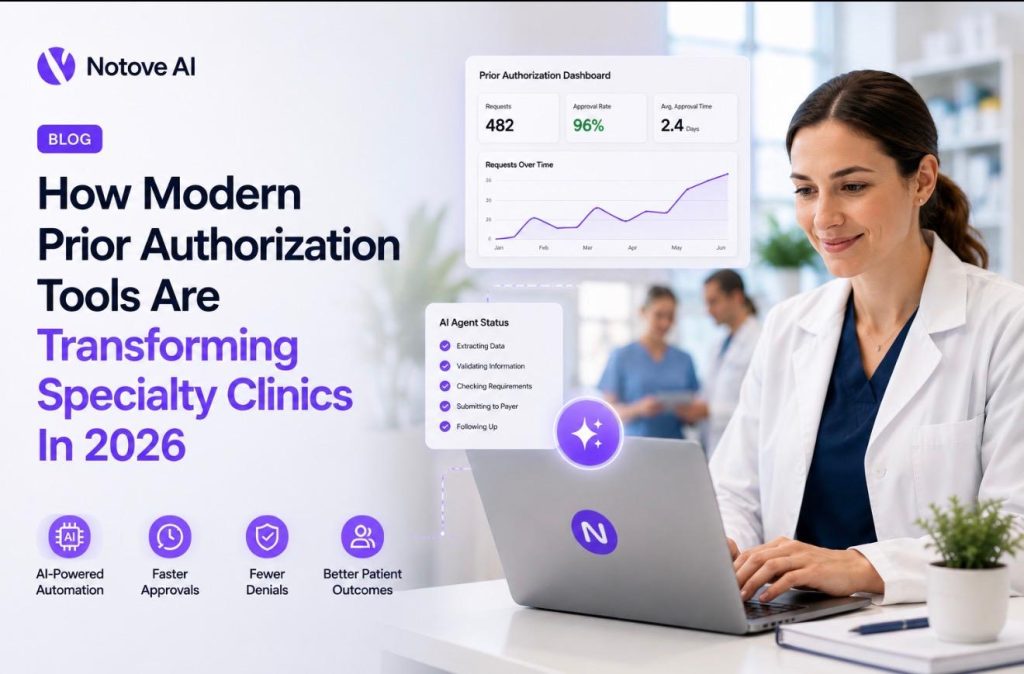
Modern prior authorization tools are changing how specialty clinics operate in 2026. For years, prior authorization meant phone calls, fax loops, and hours lost to payer portals. Staff got buried in paperwork instead of patient care. Patients waited days, sometimes weeks, for approvals that determined whether they got treated on time. This year, that pattern is finally breaking.
Digital payer workflows have matured. Documentation expectations have tightened. Specialty drugs and procedures face more scrutiny than ever. Patient volume keeps climbing. Clinics need more than a form filler to keep up. They need systems that detect requirements, gather evidence, and guide staff through submission from start to finish. That is what modern prior authorization tools actually do, and it is why 2026 looks different from every year before it.
The Core Problem: Prior Authorization Is A Revenue And Care Delivery Bottleneck
Prior authorization is not just paperwork. It is a bottleneck that touches revenue, scheduling, and patient outcomes all at once. Every delayed approval means a rescheduled procedure. Every denial means an appeal, and appeals eat clinician time nobody has to spare.
The typical workflow looks simple on paper. An order gets placed, eligibility gets checked, documentation gets pulled, a request gets submitted, and staff wait for a decision. In practice, this chain breaks constantly. A missing note element or an outdated payer criterion can stall the entire process.
Specialty clinics feel this harder than most. Think about an MRI order, a biologic infusion, or an interventional pain procedure. Each one carries its own documentation rules, and payer policies shift often. One missing conservative therapy note can delay a spine surgery for weeks.
What Modern Prior Authorization Tools Actually Include
Modern prior authorization tools combine a few distinct pieces working together. There are rules engines that flag payer requirements. There is documentation intelligence that pulls relevant chart data. There is AI drafting that prepares the actual request language. There is portal guidance and status tracking layered on top.
This is different from legacy tools. Static templates and manual checklists cannot keep pace with payer rule changes. Single payer portals do not scale across a clinic seeing dozens of insurers. Basic automation that just fills a PDF form misses the real problem entirely.
The distinction between AI agents and AI writing matters here too. AI writing drafts a sentence. AI agents orchestrate the entire process, from detecting a requirement to guiding submission and tracking the outcome. You can see this shift firsthand in how AI agents are replacing manual prior authorization staff at independent practices, where routine tasks that once consumed hours now run in the background. Human review still sits at the center of every workflow. Clinical accountability never leaves the clinic.
The 5 Capabilities Transforming Specialty Clinics In 2026

These five capabilities have become the new baseline for high performing clinics. Together, they cut approval times and reduce denial rates in measurable ways.
1. Authorization Detection At The Moment The Order Is Created
Detection happens the instant an order is placed. The system checks procedure triggers, payer plan rules, site of service requirements, and frequency edits immediately. This timing matters because it prevents clinics from scheduling patients before authorization is even confirmed.
Picture an MRI order for a lumbar spine. A modern system flags it instantly and lists the required clinical indications. Staff know exactly what is missing before the patient ever leaves the building.
2. Automated Documentation Assembly From The EHR
Gathering evidence used to mean hunting through charts by hand. Modern prior authorization tools pull relevant notes, imaging reports, lab results, and treatment history automatically. Different payers want different elements, so the packet adjusts based on who is receiving it.
For an orthopedic case, this might mean pulling physical therapy notes, medication trial duration, and exam findings into one file. Missing medical necessity documentation remains the single biggest driver of denials. Automation closes that gap directly.
3. Payer Specific Request Preparation
Every payer has its own language, its own forms, and its own criteria structure. Modern prior authorization tools draft letters and populate forms that match what each payer actually expects to see. This is where criteria alignment becomes critical, mapping clinical facts to the exact guidelines a payer follows.
A cardiology stress test request looks different from an oncology regimen justification. Staff or clinicians still review every draft before it goes out. The AI prepares it, but a human approves it.
4. Submission Assistance That Works With Real World Payer Workflows
Submission is messy in practice. Some payers want a portal upload, others want a fax, and some still require a phone call. Modern prior authorization tools generate step by step checklists so staff never miss a required field or attachment.
This matters enormously for training new hires. Instead of learning ten different payer quirks from scratch, staff follow guided prompts. An audit trail records what was submitted, when, and by whom.
5. Status Tracking, Follow Ups, And Denial Prevention Analytics
Once a request is out the door, tracking begins. Pending requests, approaching deadlines, and peer to peer triggers all get flagged automatically. Analytics surface denial reasons broken down by payer, procedure, and provider.
This changes daily operations in a real way. Scheduling becomes predictable instead of reactive. Prevention beats appeals every time, and modern tools are built to catch problems before submission rather than after denial.
Where Specialty Clinics See The Biggest Impact
Prior authorization pain looks different depending on the specialty. Here is where modern prior authorization tools make the clearest difference.
Radiology
Radiology denials often trace back to indication mismatches or missing conservative therapy history. Detection before scheduling prevents last minute cancellations. Clinics using automated indication packets see fewer scanner slots go unused. This exact shift is detailed in how prior authorization for radiology clinics cuts approval times from days to hours, which shows how scheduling stability improves once detection happens earlier.
Orthopedics And Spine
Orthopedic denials frequently come down to insufficient documentation of physical therapy duration or exam findings. Automated tools pull PT timelines and flag missing elements before submission. Fewer denials mean injections and surgeries move forward on schedule instead of stalling in review.
Cardiology
Cardiology requests hinge on guideline driven criteria like symptoms, risk factors, and prior test results. When these are not clearly stated in the chart, approvals stall. Structured extraction turns scattered notes into a payer ready narrative, which shortens approval time and reduces peer to peer calls.
Oncology And Specialty Medications
Oncology carries some of the highest stakes in prior authorization. Regimen justification, step therapy documentation, and biomarker results all need to be airtight. Delays here can interrupt active treatment, which is why prior authorization automation for oncology focuses on protecting patient access to urgent treatment. Faster starts and fewer interruptions translate directly into better patient outcomes.
Average Prior Authorization Turnaround: Manual vs Automated
The table below shows typical turnaround differences clinics report across common specialty procedures.
| Procedure Type | Manual Process (Average) | With Modern Prior Authorization Tools |
|---|---|---|
| MRI or CT Imaging | 3 to 5 business days | Same day to 24 hours |
| Orthopedic Injection or Surgery | 5 to 7 business days | 1 to 2 business days |
| Cardiology Diagnostic Testing | 4 to 6 business days | 24 to 48 hours |
| Oncology Specialty Medication | 7 to 10 business days | 2 to 3 business days |
| Pain Management Procedures | 5 to 8 business days | 1 to 2 business days |
These figures reflect general industry patterns reported by specialty clinics adopting automation. Actual results vary by payer mix and documentation quality.
What To Look For In A Modern Prior Authorization Tool

Choosing the right system takes more than a demo call. Use this checklist to evaluate options seriously.
Workflow Fit
Look at where your staff already works, whether that is the EHR, email, or payer portals. A good tool supports that workflow instead of adding another dashboard. Ask how quickly a new staff member can run their first request.
Automation Depth
Use the five capabilities above as a scoring rubric. Ask for real examples covering a radiology case, a specialty medication case, and a procedure case. Confirm the tool adapts to payer specific differences rather than relying on generic templates.
Compliance And Human Review
Confirm HIPAA compliance, encryption standards, and role based access controls. Ask exactly how human review works before anything gets submitted. Documentation integrity matters too, since every clinical fact should trace back to the chart.
Reporting That Actually Helps
Good reporting shows time per request, approval turnaround, denial rate, and top denial reasons. This data should support staffing decisions and payer escalation. Look for drill down views by payer, procedure, and provider. Clinics that track this closely often see returns detailed in the ROI of automating prior authorizations and how clinics reclaim 10 hours per week.
How Notove AI Stands Out
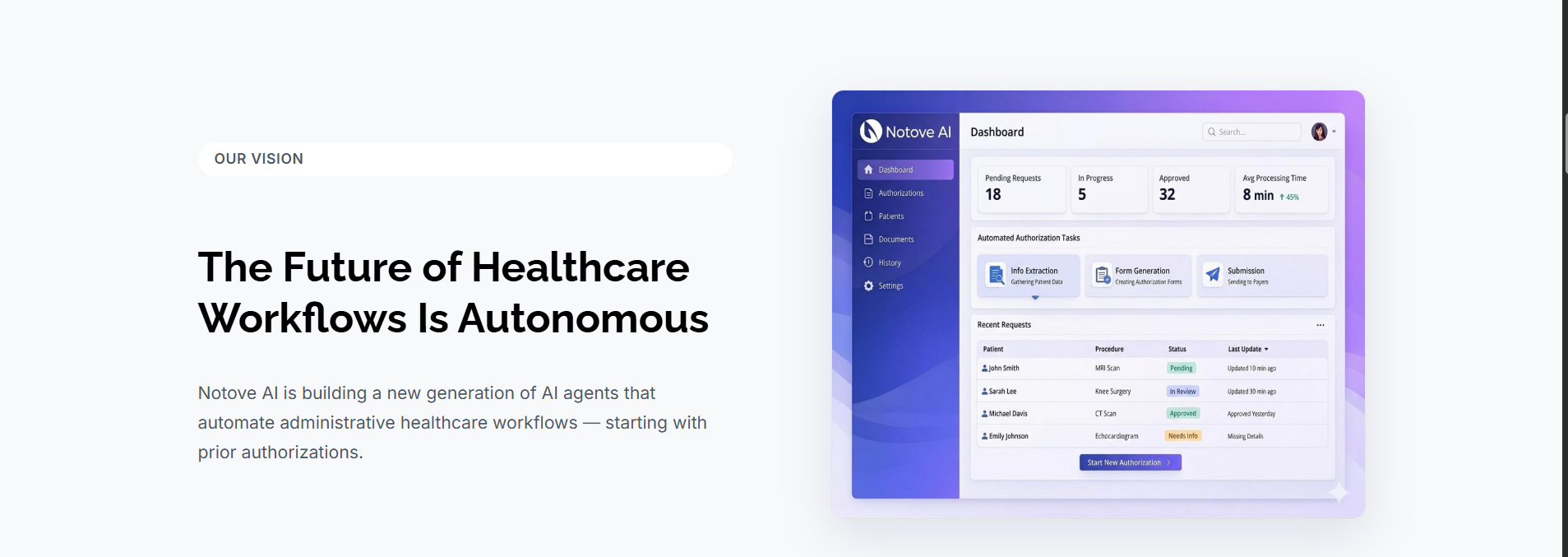
Notove AI was built specifically for specialty clinics and private practices, not generic office administration. Setup takes about five minutes, with no installation required and full HIPAA compliance built in from day one.
The flow is straightforward. Notove AI detects the authorization requirement, gathers documentation from the EHR, prepares a payer specific request, and hands it to staff for review and submission. Every step includes a full audit trail, and status tracking runs automatically after that.
Clinics report reclaiming more than 10 hours per week once the workload shifts away from manual chasing. Burnout drops. Turnaround speeds up. Denials fall because the documentation gap closes before submission instead of after.
A Realistic Rollout Plan For Specialty Clinics
Rolling out modern prior authorization tools works best in stages. Rushing a full switch across every service line invites confusion.
Week One: Baseline Your Current Performance
Track your current volume, average touch time, approval time, and denial rate. Identify the ten prior authorization types causing the most rework. Set a clear target, such as cutting touch time in half.
Weeks Two And Three: Pilot With A Narrow Scope
Choose one specialty line, like radiology MRI orders, and two or three payers. Collect direct feedback from staff on where automation helps and where it misses. Define go or no go criteria before expanding further.
Month Two And Beyond: Scale Across Services
Once the pilot proves out, expand to other procedures and specialty medications. Use analytics to coach documentation habits across the team. Build a denial playbook and protect time for peer to peer calls in advance.
Common Concerns Clinics Have
Clinics often worry about accuracy, liability, and how a new tool fits their existing EHR. These concerns are valid, and modern prior authorization tools are built to address them directly.
AI assists with drafting and gathering, but staff always review before anything goes out. Every action gets logged in an audit trail. Because these tools are web based, they work alongside any EHR without requiring a new integration project.
The goal was never to replace clinical judgment. It was always to reduce rework and prevent denials before they happen.
Conclusion: The New Standard For Specialty Clinic Operations In 2026
Modern prior authorization tools have become the new operating standard for specialty clinics in 2026. Detection happens earlier, evidence gets assembled automatically, and requests go out already aligned to payer criteria. Submission gets guided instead of guessed at, and outcomes get tracked in real time.
The impact reaches beyond the numbers. Faster approvals mean patients start treatment sooner. Fewer denials mean less administrative burden on already stretched staff. Clinics that adopt these tools now are setting the pace for everyone else in their specialty.
If your clinic is ready to see this in action, visit Notove AI to explore how the platform fits into your existing workflow. You can also contact the Notove AI team to ask specific questions about your specialty, your payer mix, and your current denial rate.
Frequently Asked Questions
What are modern prior authorization tools?
Modern prior authorization tools are AI powered systems that detect authorization requirements, gather documentation, and prepare payer specific requests. They differ from legacy software because they work end to end rather than just filling out a single form.
Do modern prior authorization tools replace clinical staff?
No, they do not replace clinical judgment or staff oversight. They handle repetitive administrative steps like documentation gathering and form preparation. Staff and clinicians still review and approve every request before submission.
How much time can a specialty clinic save with automation?
Many clinics report reclaiming more than 10 hours per week per staff member. Savings depend on procedure volume and how many payers the clinic works with. Time is saved mainly on documentation gathering and portal navigation.
Are modern prior authorization tools HIPAA compliant?
Reputable platforms, including Notove AI, are built with HIPAA compliance as a core requirement. This includes encryption, secure data handling, and regular security audits. Clinics should always confirm compliance details before onboarding any new tool.
Which specialties benefit most from prior authorization automation?
Radiology, orthopedics, cardiology, and oncology see some of the largest gains. These specialties deal with frequent payer policy changes and complex medical necessity documentation. High authorization volume also means more time saved per week.
How long does it take to set up a modern prior authorization tool?
Setup times vary by platform, but many modern tools are designed for fast onboarding. Notove AI, for example, offers a five minute setup with no installation required. Most clinics can run their first authorization request within the same day.