
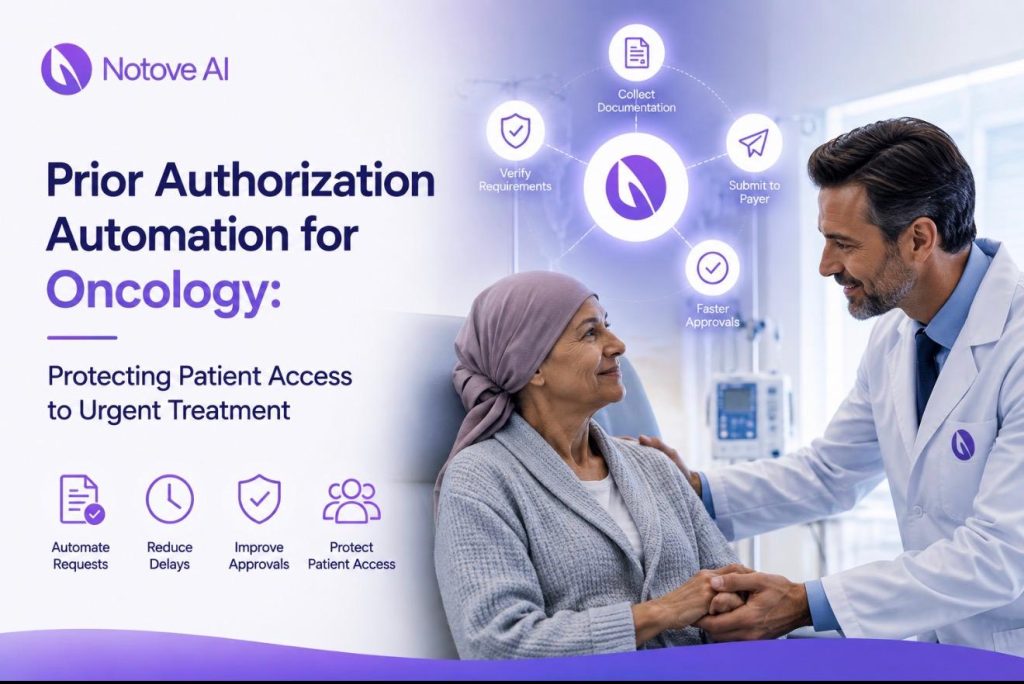
Oncology clinics know a truth that most other specialties never face in the same way. A delayed prior authorization does not just mean a paperwork backlog. It can mean a chemotherapy start pushed back a week. It can mean a PET scan rescheduled while a tumor keeps growing. Treatment windows in cancer care are narrow, and every day lost chips away at outcomes and patient trust.
Prior authorization, often shortened to PA, is the approval process insurers require before covering certain drugs, imaging, or procedures. In oncology, this process touches nearly everything. High-cost infusion drugs, biomarker-driven regimens, PET and MRI scans, and supportive medications all tend to trigger a PA request. Get one detail wrong and the whole request stalls.
This article walks through what automation actually looks like inside oncology clinics. We will cover what to automate first and what to measure. We will also cover how clinics can protect access while staying compliant. Notove AI approaches this with a simple agent-based workflow. It moves from detection to documentation assembly, then to request prep. Staff review and tracking follow, all built around how clinic teams already work.
The hidden cost of prior auth in oncology clinics (it’s not just admin time)
Ask any staff member at oncology clinics what eats their day, and prior auth usually tops the list. Portals require separate logins for every payer. Faxes still get lost. Phone hold times stretch past twenty minutes on a routine call. Peer-to-peer reviews need scheduling around a physician’s already packed calendar.
The clinical impact is just as heavy. A delayed start date can mean a patient waits longer than their oncologist wants for treatment to begin. Infusion appointments get bumped. Imaging that was meant to confirm staging gets pushed a week or more. Patients feel the anxiety of that delay directly, and it often shows up as frustration with the clinic itself.
There is a financial cost too. An empty infusion chair on a scheduled day is lost revenue that cannot be recovered. Denials pile up and require rework. Staff turnover climbs because burnout from repetitive, frustrating admin work is real. None of this is helped by shifting payer requirements. Rules vary by plan, by regimen, and by whether a drug has a newer biosimilar alternative.
Where oncology prior authorizations break down most often
Most denials in oncology clinics trace back to a handful of recurring failure points. Documentation is usually the biggest one. Missing staging details or an unclear biomarker result can sink a request early. An incomplete list of prior therapies tried does the same, often before a reviewer reaches the clinical argument.
Coding errors cause a surprising number of denials too. A mismatched J-code, an incorrect unit count, or a wrong place-of-service entry can trigger an automatic rejection. Timing issues compound the problem. A request submitted before pathology is finalized often gets kicked back. The same happens when a note is still unsigned.
Communication gaps make things worse. A payer response lands in the wrong inbox. Nobody tracks that a follow-up is due, and the request quietly stalls. The most common denial reason across oncology clinics is unclear medical necessity language. This hits off-label regimens especially hard, since they need guideline citations to back them up.
What prior authorization automation actually means in an oncology workflow
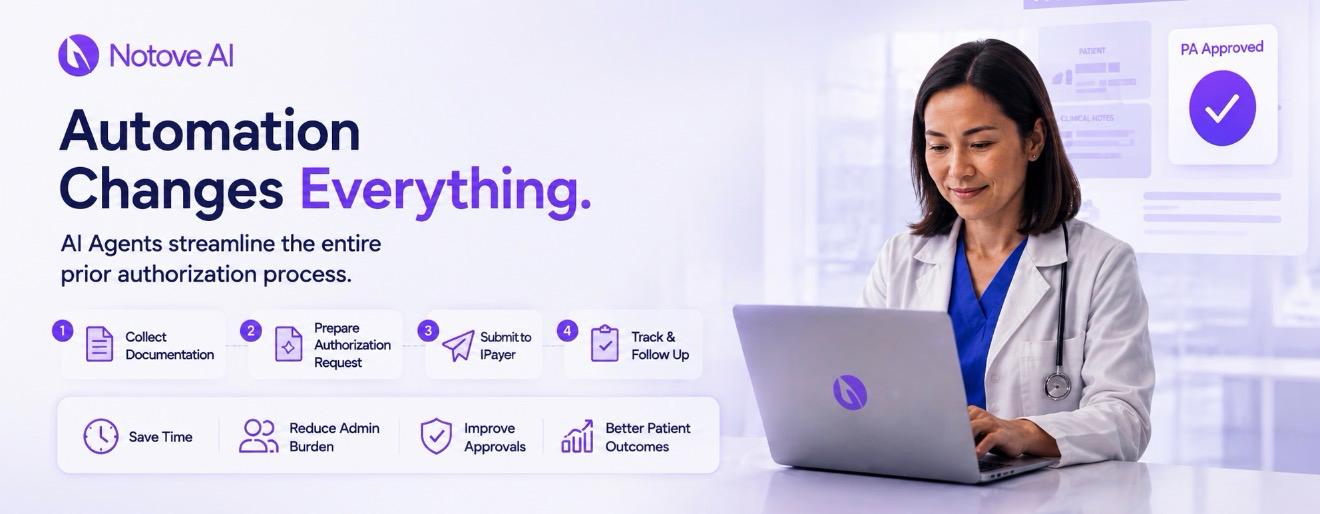
The phrase “automation” gets used loosely, so it helps to be specific. True automation for oncology clinics is not generic robotic process automation that just moves files around. It needs to be payer-aware, chart-aware, and fully auditable at every step.
A real automated workflow follows a clear sequence. First, the system identifies that a PA is needed. Then it gathers supporting clinical evidence. Next, it builds a payer-ready packet, submits it, tracks the response, and manages any follow-up requests or appeals. Human review stays built into every stage, since clinical judgment cannot be replaced by software.
This is where automation earns its value. It handles the repeatable, non-clinical steps that eat staff time without adding clinical insight. It cuts down on the swivel-chair work of copying data between systems. And it standardizes packets so quality does not depend on which staff member happened to build the request that day.
The oncology-specific data a great PA packet should include
A strong PA packet for oncology clinics needs more detail than most other specialties require. Core clinical elements include the diagnosis code, cancer stage, histology, and relevant biomarkers such as HER2, PD-L1, or EGFR status. ECOG performance status and relevant comorbidities matter too.
Treatment context rounds this out. Reviewers want to see the line of therapy, prior regimens tried, and how the patient responded or tolerated them. Dose, schedule, and treatment intent, whether curative or palliative, all need to be spelled out clearly and consistently.
Guidelines and evidence give the request its clinical backbone. NCCN category alignment, when applicable, strengthens the case. Off-label requests need peer-reviewed support and clear pathway alignment. Objective data rounds out a strong packet. Pathology excerpts, imaging summaries, and recent labs help a payer reviewer approve it without extra questions.
How AI agents reduce delays: the 5-step automation model
Notove AI structures its approach around five clear steps built for the realities inside oncology clinics. Each step targets a specific point where delays tend to creep in.
Step one is authorization detection. The system flags orders likely to require PA. This covers a drug, a scan, or a procedure, all before the request reaches a scheduling bottleneck. Step two is documentation assembly. Supporting evidence gets pulled from chart notes, labs, pathology, and imaging into one structured bundle.
Step three is request preparation, where payer-specific forms and a medical necessity narrative get drafted together. Step four brings staff back into the loop for review and submission, keeping clinician oversight central to the process. Step five is submission tracking. Teams get a centralized view of status, deadlines, and follow-up prompts, so nothing gets lost in an inbox.
What to automate first in an oncology clinic
Not every workflow needs automation on day one. Chemo and biologic regimens with frequent repeat authorizations are usually the best starting point. Documentation patterns tend to stay consistent across cycles.
Supportive care medications, including antiemetics and growth factors, also make strong early candidates because their renewals follow predictable timelines. High-volume imaging requests tied to staging and restaging schedules are another clear win.
Peer-to-peer prep packs deserve early attention too. A summarized timeline with guideline citations helps here. It can shorten what is often the most time-consuming part of the process. Appeal drafts and reconsideration letters can follow a templated structure as well, while keeping final sign-off firmly in human hands.
How to evaluate prior authorization automation vendors for oncology

Choosing the right vendor matters as much as choosing to automate at all. Oncology clinics should look for payer-specific intelligence, meaning the system adapts as requirements shift without breaking existing workflows.
EHR adaptability matters too. A good solution should work alongside any EHR system without demanding a heavy IT lift or a long implementation timeline. Clinics evaluating options for their radiology counterparts have found similar principles apply. This piece on prior authorization for radiology clinics shows how approval times shrink from days to hours.
Clinical accuracy controls are non-negotiable. Look for cited sources, clear evidence traceability, and flags for missing or incomplete data. Security matters just as much. This guide on HIPAA compliant prior authorization automation covers the specific questions to ask. It’s a useful checklist before signing any vendor contract.
The table below breaks down average turnaround times across common oncology PA request types, comparing manual workflows against automated ones.
| Request Type | Manual Turnaround (Avg.) | Automated Turnaround (Avg.) |
|---|---|---|
| Chemotherapy/biologic regimen | 5 to 8 business days | 1 to 2 business days |
| PET/CT staging or restaging | 4 to 7 business days | Same day to 1 business day |
| Supportive care medication renewal | 3 to 5 business days | Same day |
| Peer-to-peer review scheduling | 6 to 10 business days | 2 to 3 business days |
| Appeal or reconsideration submission | 10 to 14 business days | 4 to 6 business days |
Metrics that prove you’re protecting patient access
Time savings alone do not tell the full story for oncology clinics. Access metrics matter more. Time-to-approval and time-to-treatment start show whether patients are actually getting care faster.
Quality metrics matter just as much. Clean submission rate and first-pass approval rate reveal whether documentation is solid before it ever reaches a payer. Denial rate broken down by payer or regimen shows exactly where problems concentrate.
Operational metrics round out the picture. Staff minutes per PA, backlog size, and peer-to-peer frequency all show whether workload is actually shrinking. Financial metrics connect the whole effort back to the clinic’s bottom line. This includes recovered revenue from fewer delays and better infusion chair utilization. Clinics that have measured this closely often see similar results. This breakdown of the ROI of automating prior authorizations shows how teams reclaim ten hours per week.
Implementation in a real clinic: a low-risk rollout plan
Rolling out automation does not need to be an overwhelming project. Week zero should focus on baseline measurement. Pick one or two workflows, such as PET/CT requests plus your top three regimens, rather than automating everything at once.
Week one is for configuring intake triggers, defining a documentation checklist, and setting clear review roles. Week two should run a parallel workflow. The AI prepares packets while staff still submits manually, which validates quality before scaling up.
Weeks three and four are for expanding to more payers and regimens. This is also when dashboards get built and escalation paths get defined for urgent treatment starts. Clinics without a dedicated IT department often assume rollout requires technical resources they do not have. This guide on how to implement prior authorization AI with no IT team required shows that assumption is usually wrong.
Compliance and risk: how to use AI in prior auth without creating new problems
HIPAA compliance has to be the starting point for any oncology clinics considering automation. Leadership should confirm PHI handling practices, access controls, encryption standards, and a clear audit trail before signing anything.
Human oversight remains essential throughout. AI should draft, and humans should approve, especially for anything touching medical necessity language or clinical summaries. Hallucination risk needs active mitigation too. Any claim in a generated packet should trace back to an actual chart element. Clear flags should mark missing labs or pathology.
Recordkeeping closes the loop. Submission packets, timestamps, and payer responses all need to be stored properly for future audits and appeals. This is not optional in a specialty where documentation quality directly affects patient outcomes.
Why Notove AI is different for oncology clinics
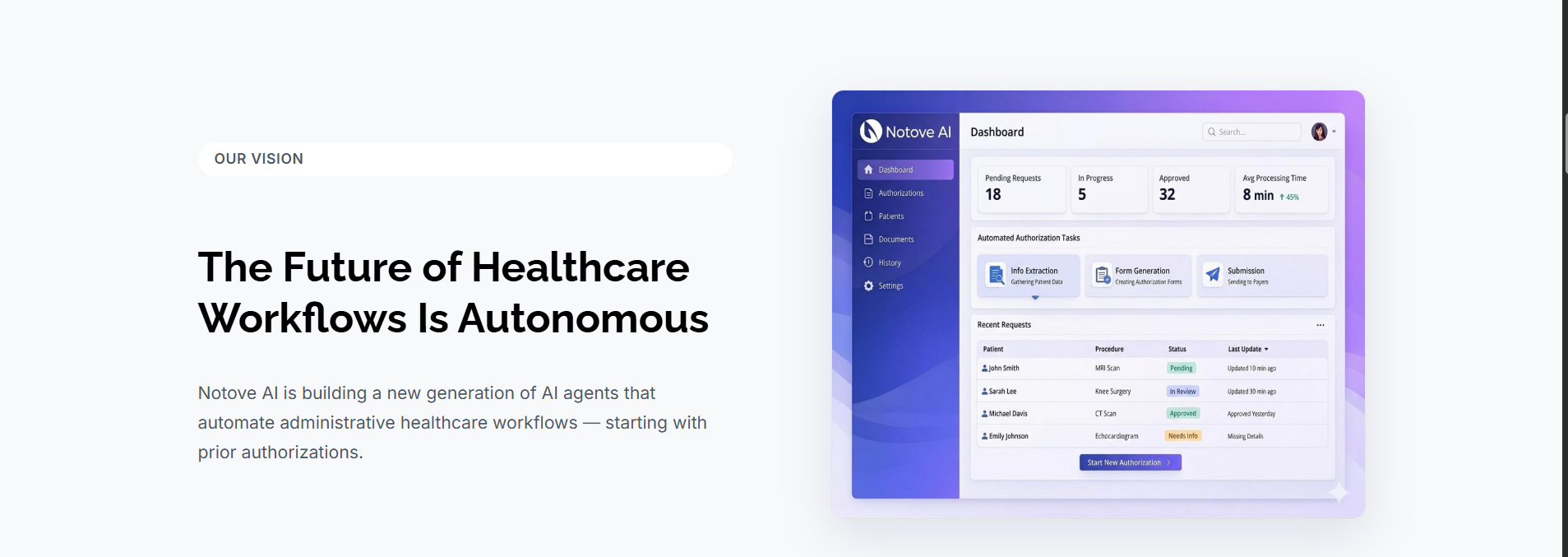
Notove AI was built specifically for administrative healthcare workflows, not as a generic writing tool retrofitted for medical use. The detection-to-tracking model was designed around how oncology clinics actually operate day to day.
Setup takes about five minutes, with no installation required and no disruption to existing systems. It works alongside any EHR, which matters for smaller practices that cannot afford a lengthy integration project. The impact shows up in workload reduction of up to eighty percent. Fewer denials and more staff time for direct patient care follow close behind.
Every step still includes physician and staff review before anything gets submitted. That human-in-the-loop safeguard makes this approach trustworthy for high-stakes oncology work. Full HIPAA compliance and secure handling back it up.
Common objections from oncology admins (and how to address them)
Some admins worry that payer variability makes automation pointless, since every insurer has different rules. In practice, the core clinical packet stays standardized even when payer-specific forms differ. That standardization is exactly where automation adds the most value.
Others worry about accuracy, fearing an automated system might submit something wrong. Human-in-the-loop review, paired with traceability back to the original chart data, is the direct answer to that concern. Worries about a long implementation timeline are common too. A phased rollout over two to four weeks addresses that without disrupting daily operations.
A frequent objection is that existing staff already handle this work. Automation is not a replacement for that team. It is a capacity multiplier instead. It cuts touches per case and improves tracking, so the same staff can handle more without burning out.
Wrap-up: a practical next step to protect access this quarter
The best prior authorization process for oncology clinics prevents delays before they happen. It never lets a delay reach a scheduling bottleneck. Every metric, every workflow step, and every packet detail exists to serve that single goal.
A good next step is picking one high-volume workflow. PET/CT scans or your top chemo regimens work well, alongside baselining current turnaround times. From there, a small pilot can show real results within weeks rather than months.
If protecting urgent treatment access is a priority for your clinic this quarter, Notove AI offers early access. It’s built around denial reduction and faster time-to-treatment for oncology teams. Visit the site to see how the pilot works and whether it fits your clinic’s workflow.
Frequently Asked Questions
What is prior authorization automation in oncology clinics?
Prior authorization automation refers to software that detects when a drug, scan, or procedure needs payer approval. It then gathers supporting chart data and prepares a request. In oncology clinics, this reduces delays for chemotherapy, imaging, and supportive medications.
How long does prior authorization typically take for cancer treatment?
Manual prior authorization for oncology often takes five to ten business days depending on the payer and request type. Automated workflows can shorten this to same-day or one to two business days in many cases. Turnaround still depends on documentation completeness.
Can AI submit prior authorizations without staff involvement?
No. Reliable automation tools, including Notove AI, keep staff review built into the process before anything is submitted to a payer. AI handles documentation gathering and form preparation, while trained staff confirm accuracy and approve the final submission.
Is prior authorization automation HIPAA compliant?
Reputable vendors build automation tools with HIPAA compliance as a core requirement, not an add-on. This includes encryption, role-based access controls, and detailed audit logs. Clinics should confirm these specifics directly with any vendor before adopting a tool.
Does automation work with existing EHR systems used by oncology clinics?
Most modern automation platforms work alongside any EHR. They do not require a full system replacement or a lengthy integration project. This keeps implementation timelines short, often a matter of weeks rather than months, for oncology clinics without dedicated IT teams.
What causes most prior authorization denials in oncology?
The most common denial driver is insufficient medical necessity documentation, especially for off-label or complex regimens. Missing biomarker results and incomplete prior treatment history add to the problem. Coding mismatches also account for a large share of denials across oncology clinics.
How much time can oncology clinics realistically save with automation?
Clinics using automated prior authorization workflows commonly report reclaiming ten or more staff hours per week. Actual savings depend on request volume, payer mix, and how many workflows are automated. Starting with high-volume regimens tends to produce the fastest measurable results.