

CPT Codes are five-digit numbers that describe medical, surgical, and diagnostic services. Every clinic uses them, often without thinking twice. They show up on orders, charge tickets, claims, and patient statements. If you work in a clinic, CPT Codes are part of your daily language. This is true whether you code claims or just schedule visits. This guide breaks CPT Codes down in plain English, without the coder-textbook jargon. It is written for front desk staff, medical assistants, providers, and billing teams who need the basics fast.
CPT Codes in Plain English
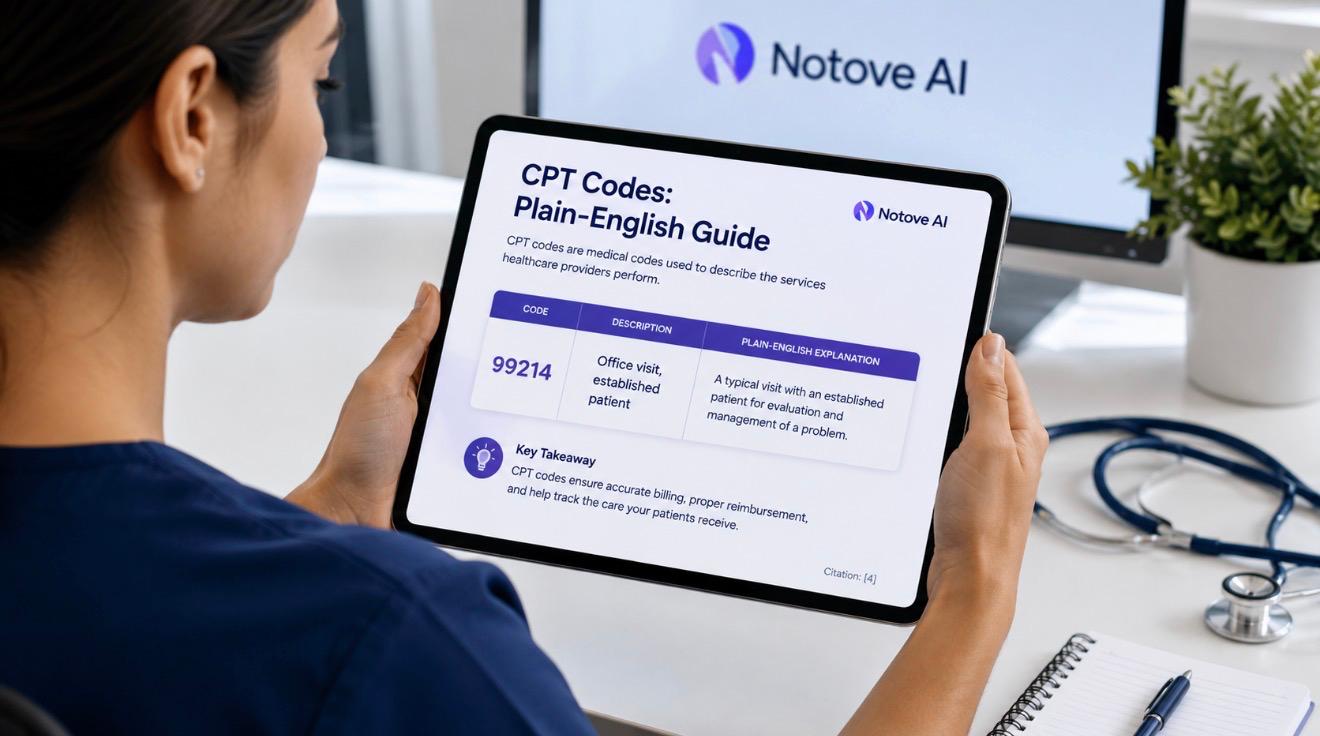
CPT stands for Current Procedural Terminology. CPT Codes are maintained by the American Medical Association. They create a shared language between providers, payers, and patients. Without that shared language, every clinic would describe procedures differently. Insurance companies would have no consistent way to process claims. CPT Codes solve that problem by standardizing how services get documented and billed.
CPT Codes vs ICD-10 vs HCPCS
This is where a lot of new staff get confused. CPT Codes describe what was done during a visit. ICD-10 codes explain why it was done, meaning the diagnosis. HCPCS Level II codes cover supplies, drugs, and equipment, like ambulance rides or durable medical equipment. A single claim line usually needs all three working together. Picture a claim for a knee injection. The diagnosis code explains the condition. The CPT code describes the injection procedure. A HCPCS code might cover the medication itself. Mixing these up is one of the most common front desk errors.
Who Creates CPT Codes and How Updates Work
The AMA maintains CPT Codes and updates them every year. Codes change for a few reasons. New technology gets approved. Clinical guidelines shift. Some updates simply add clarity or reduce fraud and abuse risk. Every update comes with an effective date. That date matters for scheduling, EHR templates, and billing accuracy. Clinics need a yearly routine to stay current. Update your chargemaster and fee schedule mappings. Refresh EHR picklists and staff cheat sheets. Confirm payer rules tied to any changed CPT Codes. Using a deleted or outdated code is a fast way to trigger a denial.
The Main CPT Code Categories
Not all CPT Codes work the same way. They fall into three categories, and knowing the difference helps staff avoid confusion at charge entry.
| Category | Code Pattern | Main Purpose | Reimbursement Expectation |
|---|---|---|---|
| Category I | Five numeric digits | Standard billable procedures and services | Typically reimbursed by payers |
| Category II | Ends in the letter F | Optional performance and quality tracking | Not separately reimbursed |
| Category III | Ends in the letter T | Emerging technology and new procedures | Often limited or inconsistent coverage |
Category I codes make up most of what your clinic bills every day. Category II codes support quality reporting programs. Category III codes track new procedures before they earn permanent Category I status.
How CPT Codes Are Structured
Every CPT code has an official descriptor. The descriptor is the exact language tied to that code. Broad sections cover areas like evaluation and management, surgery, radiology, and lab work. Code selection should always follow the documentation in the note or order. Staff typically encounter CPT Codes inside order sets, superbills, and procedure templates. A common red flag is picking a code because it usually works. That habit ignores what the documentation actually supports, and it invites denials later.
CPT Codes in the Real Revenue Cycle
CPT Codes travel through several steps before payment lands. The flow generally looks like this. A patient checks in and eligibility gets verified. The visit or procedure happens. Documentation gets completed. Charge capture follows, then coding review, then claim submission. The payer adjudicates the claim. Payment posting comes next, followed by any patient billing. Errors often creep in during charge capture or through missing modifiers. Mismatched diagnosis and procedure codes cause denials too. Some services also require prior approval before they can be billed. Clinics juggling procedure-heavy specialties know this pain well. Our step-by-step guide to prior authorization for primary care walks through the same friction points.
What Clinic Staff Actually Need to Do
CPT Codes touch nearly every role in a clinic. Front desk staff capture the reason for the visit and verify benefits. They should flag any prior authorization requirements early. Clinical staff and medical assistants confirm that documented procedures match what was actually performed. Providers document medical necessity, time spent, and procedure specifics. Billing and AR teams validate that codes, modifiers, and diagnoses line up correctly. Managers keep fee schedules current and run denial trend reports. Specialty clinics juggling high volumes of procedures often lean on newer tools. Guides on modern prior authorization tools transforming specialty clinics show how these roles are shifting toward automation.
Modifiers: The Tiny Add-Ons That Matter
Modifiers are two-digit add-ons attached to CPT Codes. They clarify how, where, or why a service was performed. Getting modifiers wrong is one of the fastest ways to trigger a denial. Modifier 25 signals a separate evaluation and management service on the same day as a procedure. Modifier 59 marks a distinct procedural service. Modifiers 26 and TC split professional and technical components. Modifier 50 covers bilateral procedures, while RT and LT indicate laterality. Overusing 25 or 59 without documentation support is a common compliance risk. Missing laterality is another frequent and avoidable mistake.
Units, Times, and What Counts
Some CPT Codes require unit counts. Injections, therapy sessions, and repeated lab tests often fall into this group. Time-based services need accurate start and stop times in the documentation. Billing two units when only one was performed is a common error. Rounding time incorrectly causes problems too. Duplicate billing for bundled components is another frequent mistake. A simple internal checklist helps standardize this. Track units, laterality, lesion counts, and number of views consistently across every chart.
Bundling and NCCI Edits
Some CPT Codes are considered part of another service, not separate from it. This is called bundling. Payer systems apply National Correct Coding Initiative edits to catch unbundling attempts. When bundling rules apply, claims may deny or pay at a reduced rate. Staff should never assume that doing two things means billing two codes. Escalate questions to your coding or billing lead first. Document separate sites, separate encounters, or separate indications clearly. That documentation supports billing distinct CPT Codes when it is truly warranted.
Choosing the Right CPT Code Without Guessing

Good CPT code selection always starts with documentation. What was performed, by whom, and where it happened all matter. Use official descriptors instead of picking the closest match available. Check basic payer policy details too, including coverage and prior authorization rules. Confirm modifier needs, unit counts, and diagnosis linkage before submission. Ask for clarification when documentation is missing key details. A quick decision checklist helps staff stay consistent across every chart.
Decision Checklist for CPT Code Selection
- Does the documentation clearly describe the service performed
- Does the code descriptor match that documentation exactly
- Are modifiers, units, and laterality confirmed
- Does the diagnosis support medical necessity for this code
- Has prior authorization been verified where required
Common CPT Code Mistakes in Clinics
A handful of mistakes repeat across most clinics. Using outdated or deleted CPT Codes is one. Mismatched diagnosis and procedure codes cause medical necessity denials. Missing or incorrect modifiers are another frequent issue. Incorrect units and missing time documentation also trigger denials. Copy-paste charge habits, where staff bill what they always bill, create risk. Missing laterality or site detail is common in procedure-heavy specialties. Prevention comes down to training, templates, and regular spot audits. Independent practices increasingly rely on automated tools to catch these errors early. Work on how AI agents are replacing manual prior authorization work highlights this shift in smaller practices.
CPT Codes, Compliance, and Audits
CPT accuracy is not just a billing issue. It is a compliance issue too. Overcoding and undercoding both carry real risk. Auditors look for documentation that supports the billed service. They check for correct modifiers, medical necessity, signatures, and dates. The simplest rule to remember is this. If it is not documented, it did not happen. Providers should keep clear procedure notes with key details included. Time should be documented whenever a code requires it. High-risk specialties like oncology face added scrutiny here. Resources on prior authorization automation built for oncology clinics show how urgent-treatment cases raise the compliance stakes further.
Quick Cheat Sheet for CPT Code Denials
When a claim denies over a CPT code, work through it in order.
- Read the denial code and message carefully
- Confirm patient info, date of service, and place of service
- Check the diagnosis link, modifiers, and units
- Verify the code was valid on that date of service
- Check for bundling or NCCI conflicts
- Route coverage or authorization issues to the right team
- Query the provider for an addendum if documentation is unclear
- Track the pattern so it does not repeat
Wrap-Up: Getting CPT Codes Right in Your Clinic
CPT Codes describe what your clinic did for a patient. Getting them right depends on clean documentation and a consistent workflow. Build internal habits around picklist governance and modifier guidance. Review denials regularly instead of waiting for a backlog. Keep annual CPT Codes updates on a calendar so nothing slips. None of this happens in isolation, though. Many denials trace back to the same root cause, incomplete or delayed prior authorization. That is the exact administrative burden Notove AI was built to solve. If your clinic wants less paperwork and more patient time, join the waitlist. See how automated prior authorization support fits your existing workflow.
FAQ
What do CPT Codes stand for?
CPT stands for Current Procedural Terminology. CPT Codes are five-digit codes maintained by the American Medical Association. They describe medical, surgical, and diagnostic services performed during patient care.
Are CPT Codes the same as ICD-10 codes?
No, CPT Codes and ICD-10 codes serve different purposes. CPT Codes describe the procedure or service performed. ICD-10 codes explain the diagnosis behind that service. Claims typically need both to process correctly.
Who is responsible for maintaining CPT Codes?
The American Medical Association maintains and updates CPT Codes every year. Updates reflect new technology, revised clinical guidance, and coding clarity improvements. Clinics must track these changes to avoid billing outdated codes.
What happens if a clinic uses an outdated CPT code?
Using a deleted or outdated CPT code usually triggers a claim denial. Payers only accept codes that are valid for the date of service. This is why annual chargemaster updates matter so much.
Why do modifiers matter with CPT Codes?
Modifiers clarify how, where, or why a service was performed. Missing or incorrect modifiers are a leading cause of claim denials. Common examples include modifier 25, modifier 59, and laterality modifiers like RT and LT.
How do CPT Codes affect prior authorization?
Some CPT Codes require prior authorization before a payer will approve payment. Missing this step is a common cause of denied claims. Clinics increasingly use automated tools to catch these requirements early in the workflow.
Can front desk staff make CPT-related errors?
Yes, front desk staff can contribute to CPT-related denials. Incomplete visit reasons or missed prior authorization flags cause downstream problems. Verifying benefits and documenting the reason for visit accurately helps prevent this.